“I never imagined that the woman I thought I had left behind forever would be wheeled past me on a hospital gurney, nine months pregnant and struggling to breathe while my girlfriend demanded a luxury maternity suite. The moment I saw her, my world shattered. And when the truth slammed into me, I realized the impossible child she was protecting could only be mine.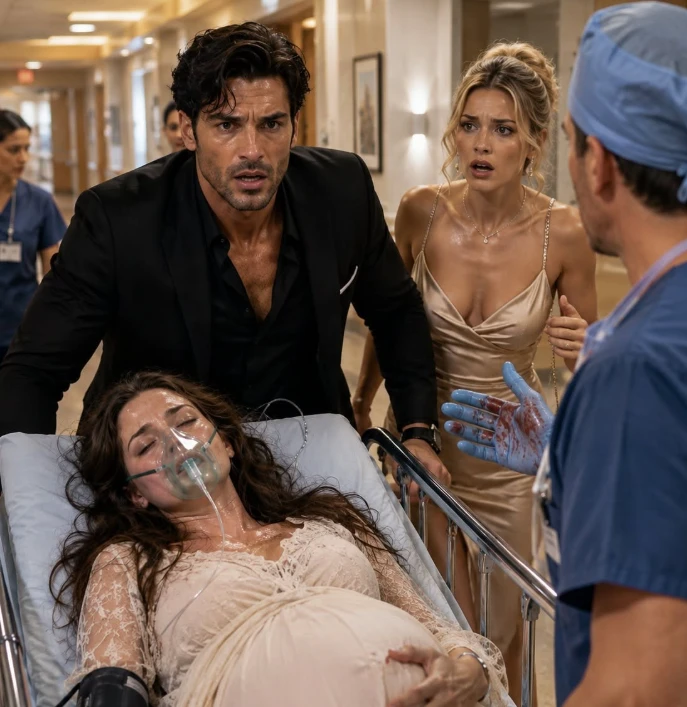
Screams had never bothered me before. In my world, people screamed when deals went bad, when enemies lost everything, or when fear finally caught up with them. I had spent years building a reputation that made grown men tremble, and I never lost sleep over it.
But at exactly 11:17 that night, the doors to the maternity emergency unit at Northwestern Memorial Hospital flew open, and every sound around me seemed to disappear.
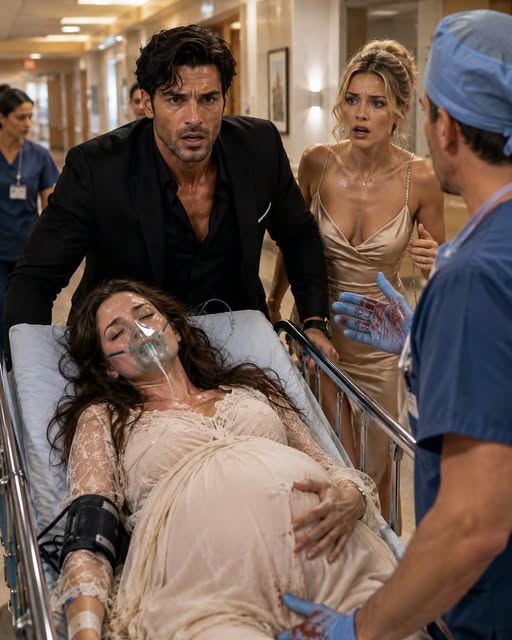
“Peripartum cardiomyopathy!” one of the paramedics shouted as they rushed inside. “Thirty-four weeks! Severe respiratory distress! Blood pressure is crashing! Move!”
At first, I barely looked up. I had only brought my girlfriend, Madison Chen, to the hospital because she complained about stomach pain. Judging by the way she kept checking her reflection in her phone, she seemed far more concerned about her appearance than whatever was hurting.
“This place smells like bleach and sadness,” Madison complained, wrinkling her nose. “Please tell me they have private VIP rooms. I’m not sitting around with everyone else.”
I barely heard another word she said.
Because the woman on that gurney was Elena.
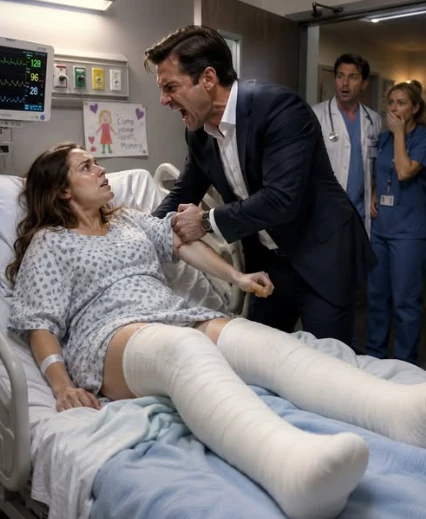
My ex-wife looked almost unrecognizable. Her skin was ghostly pale, sweat soaked her hair, and every desperate breath looked like it might be her last. One trembling hand gripped the side rail while the other rested protectively over a stomach so unmistakably pregnant that my heart stopped.
My titanium phone slipped from my hand, smashed against the marble floor, and I didn’t even notice.
For several endless seconds, my brain refused to accept what my eyes were seeing.
Then the dates came rushing back.
Our divorce had been finalized eight months ago.
The last night we ever spent together wasn’t filled with promises or hope. It was filled with whiskey, tears, and two broken people holding each other one last time because neither of us could find the courage to say goodbye.
The next morning, Elena disappeared without a word.
Now she was carrying a baby conceived that very night.
My baby.
“Elena!” a nurse shouted as they rushed her through the double doors. “Stay with us! Don’t close your eyes!”
My chair slammed backward as I shot to my feet.
“Who was that?” Madison demanded, staring at me.
I couldn’t answer.
I was already running.
My security team immediately recognized the look on my face and followed without hesitation. Jonas caught up beside me as I reached the nurses’ station, planting both hands firmly on the counter.
“I need information about a patient,” I said, struggling to keep my voice steady. “Elena Ashford. She was just brought in.”
The nurse calmly searched her computer before looking back at me.
“Are you immediate family?”
“I’m her husband.”
She didn’t even blink.
“According to her records, you’re divorced.”
Her refusal hit me harder than any insult ever could. My money had always opened locked doors, and fear usually broke down the rest.
“You’re not listed as an authorized contact,” she continued. “I’m sorry, but I can’t release any information.”
My voice dropped to a dangerous whisper.
“You need to listen very carefully.”
“Boss,” Jonas warned quietly, gripping my arm. “Not here.”
Out of the corner of my eye, I saw the nurse’s hand slowly move beneath the desk, probably reaching for the security alarm.
For three agonizing seconds, every instinct inside me screamed to force my way through those doors.
Then I pictured Elena fighting for her life alone.
The last thing she needed was chaos with my name attached to it.
Behind me, Madison’s high heels echoed across the polished floor until she stopped beside the desk. Her eyes drifted toward the emergency doors, then back to me. I watched the realization spread across her face.
“That was your ex-wife,” she whispered.
I said nothing.
Her eyes widened as she replayed everything she had just seen—the swollen belly, the panic on my face, the silence I couldn’t break.
“Oh my God,” she breathed. “She’s pregnant.”
She stumbled backward as if someone had punched her.
“You told me you hadn’t seen her in months.”
“I haven’t.”
“Then… why is she pregnant?”
Before I could answer, the operating room doors burst open.
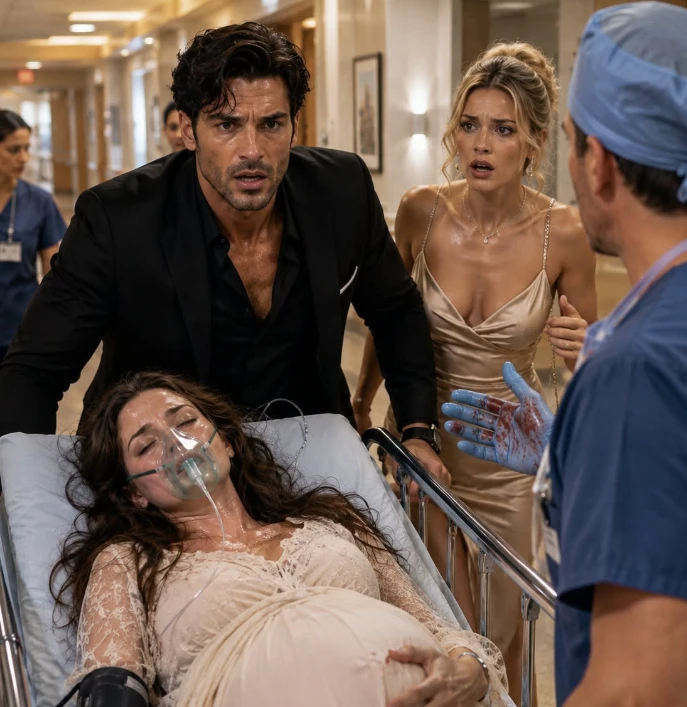
A doctor rushed into the hallway with blood covering his gloves, scanned the waiting room, and shouted Elena’s name.
Then he looked directly at us…
…and demanded to know which one of us was the baby’s father.
“I am.”
The answer tore out of me before anyone else could speak.
Madison grabbed my arm.
“You don’t know that.”
I shook her off.
The doctor’s eyes moved from my face to hers, then back to me. Blood covered the front of his surgical gown, and the urgency in his expression erased any patience he might ordinarily have possessed.
“Name?”
“Adrian Ashford.”
His eyes sharpened with recognition.
Everyone in Chicago knew my name.
For once, it meant nothing.
“Do you know the patient’s blood type?”
“O positive.”
“History of heart disease?”
“Her mother died suddenly at thirty-eight. They called it viral heart failure, but Elena never received the full medical records.”
“Any clotting disorders?”
“None that I know of.”
“Medication allergies?”
“Penicillin.”
The doctor nodded toward a nurse, who immediately relayed the information through the operating-room doors.
“What is happening?” I demanded.
“Ms. Ashford is in acute heart failure. Her heart is not pumping enough blood to support both her and the fetus. We need to deliver the baby immediately.”
“Then do it.”
“We are.”
His tone hardened.
“But she may need mechanical cardiac support. She could suffer cardiac arrest during delivery.”
My lungs stopped working.
“What are her chances?”
“I cannot give you a reliable number right now.”
“Give me an unreliable one.”
“I won’t.”
He started to turn away.
I caught myself before reaching for him.
“What about the baby?”
“Thirty-four weeks gives us a reasonable chance, but the fetal heart rate has begun dropping.”
Reasonable chance.
I had built an empire by forcing uncertainty into contracts, models, and percentages.
Now the two people behind those doors existed beyond anything I could negotiate.
The doctor looked at me once more.
“Are you legally authorized to make decisions for her?”
“No.”
“Then we will continue under emergency authority. If you have relevant medical information, give it to the nurse.”
He disappeared.
Madison stood beside me with one hand pressed against her abdomen.
“This is insane.”
I stared at the operating-room doors.
“She’s carrying my child.”
“You don’t know that.”
“Yes.”
“How?”
I finally looked at her.
“The timing.”
Madison’s face tightened.
“You told me the marriage had been over for months before the divorce.”
“It was.”
“Then why did you sleep with her?”
The question sounded less like heartbreak than accusation.
May you like


As though my past had violated an agreement she believed already existed.
“The night the divorce became final.”
Her mouth opened.
“You cheated on me.”
“You and I were not together.”
“You were calling me.”
“I called you about the Halcyon transaction.”
“You said you wanted to see me when you returned.”
“I said we would have dinner.”
Madison laughed sharply.
“You expect me to believe dinner meant nothing?”
“I don’t care what you believe right now.”
Her eyes widened.
She was accustomed to being indulged.
Restaurants emptied for her.
Designers sent dresses before collections launched.
Hotel managers upgraded rooms the moment she entered a lobby.
Only fifteen minutes earlier, she had been demanding a luxury maternity suite for stomach pain that now appeared to have vanished.
“Jonas,” I said.
My security chief stepped forward.
“Take Madison home.”
She stared at me.
“You cannot dismiss me like an employee.”
“I am asking you to leave a medical emergency.”
“I came here because I was in pain.”
“Then register as a patient.”
Her hand dropped from her stomach.
“I will not stand outside while your ex-wife uses a baby to drag you back into her life.”
Something in her wording caught my attention.
Not the cruelty.
The certainty.
“How long have you known?”
Madison went still.
Jonas looked toward her.
“What are you talking about?” she asked.
“You didn’t ask whether Elena was pregnant.”
“I saw her.”
“You asked why she was pregnant.”
“That is the same thing.”
“No.”
I stepped closer.
“You looked shocked to see her here. You did not look shocked that the child might be mine.”
Her face changed for less than a second.
Enough.
“What did you know?”
“Nothing.”
“Jonas.”
He moved between us.
Madison backed away.
“You’re threatening me in a hospital?”
“No.”
I looked at Jonas.
“Take her phone. Preserve it.”
“You have no right!”
Jonas did not touch her.
He knew better.
“Ms. Chen,” he said calmly, “Mr. Ashford is requesting that you voluntarily preserve your device because it may contain information relevant to an emergency involving a patient and unborn child. You may refuse.”
“I refuse.”
She clutched the phone against her chest.
“Then leave,” I said.
Her composure shattered.
“You’ll regret humiliating me.”
I turned back toward the operating-room doors.
Madison waited for a response.
When none came, her heels struck the polished floor as she walked away.
Jonas remained beside me.
“Follow her,” I said.
“Discreetly?”
“No contact. No intimidation. Document where she goes and who she calls. Have legal preserve all communications involving Elena.”
Jonas hesitated.
“All communications?”
“Eight months.”
“That will require board counsel if company systems are involved.”
“Call them.”
He stepped aside to make the call.
A nurse approached me with a clear plastic bag.
Inside were Elena’s belongings.
A coat.
A damaged phone.
A small canvas purse.
A pair of worn black shoes.
“Are you taking responsibility for these?”
“Yes.”
“You are not listed as family.”
“I understand.”
She studied me.
“Her authorized contact is on the way.”
“Who?”
“I cannot say.”
The answer irritated me.
I forced myself to accept it.
“Can you tell me whether the baby has been delivered?”
The nurse looked toward the doors.
“Not yet.”
Then alarms sounded inside.
People began moving faster.
A cart disappeared through one door.
Another physician ran in from the corridor.
I heard someone shout:
“Fetal heart rate sixty!”
Then:
“We’re losing her pressure!”
The operating-room doors swung closed again.
I stood motionless.
For years, men had called me ruthless.
They described the Ashford organization in whispers, exaggerating legitimate businesses into criminal mythology because fear made negotiations easier.
I never corrected them.
A reputation was cheaper than violence.
Now every rumor about my power became meaningless beneath hospital lights.
I could not enter the room.
Could not force Elena’s heart to beat.
Could not order my child to breathe.
The only thing I could do was wait.
My gaze dropped to the clear bag.
A folded document protruded from Elena’s purse.
The nurse had sealed it without reading.
A name was written across the front.
For Dr. Naomi Hale if I cannot speak.
Not for me.
I remembered Naomi.
Elena’s closest friend from medical school.
The woman who had looked at me during our divorce hearing as though she wanted to drag me into traffic.
Twenty minutes later, Naomi arrived.
She ran down the corridor wearing navy scrubs beneath a winter coat.
When she saw me, she stopped so abruptly that another visitor nearly collided with her.
“What are you doing here?”
“I saw Elena brought in.”
Naomi’s eyes moved toward the operating-room doors.
“Is she alive?”
“Yes.”
“You don’t know that.”
“The doctors are operating.”
She approached the nurses’ station.
“I’m Dr. Naomi Hale. I’m Elena Ashford’s medical proxy and emergency contact.”
The nurse verified her identity and immediately passed over the sealed bag.
Naomi saw the envelope.
Her face collapsed.
“No.”
She whispered the word as if Elena had already died.
I stepped closer.
“What is it?”
“None of your business.”
“She is carrying my child.”
Naomi looked at me.
Hatred entered her face.
“You don’t get to arrive after eight months and claim either of them.”
“I did not know.”
“She told you.”
“No.”
“She tried.”
The corridor narrowed around us.
“When?”
“Week seven.”
“I never heard from her.”
“She sent you the ultrasound.”
My mouth went dry.
“How?”
“Certified mail to your office. Email. Your private number. She even went to the Ashford Tower.”
I looked toward Jonas.
He had finished his call and now stood within earshot.
“Was Elena ever at headquarters?”
He frowned.
“Not that I know.”
Naomi laughed bitterly.
“She waited in your lobby for three hours.”
“What date?”
“March twelfth.”
I remembered that day.
Madison and I had flown to New York for a closing.
My chief of staff sent a message saying an unstable woman claiming to know me had appeared without an appointment.
Security handled it.
I never asked who she was.
“What happened?” I said.
“Your people removed her.”
Jonas stiffened.
“Who authorized that?”
Naomi looked directly at me.
“Your office.”
I thought of the command I had given after Elena disappeared the morning following our final night.
No calls.
No messages.
No personal contact.
If she wanted the divorce, she had it.
I had issued the order while angry, hungover, and devastated.
My staff treated it as permanent policy.
Even after I changed my mind.
Even after I spent months searching privately.
I had created the wall.
Someone else had strengthened it.
“She sent a certified letter,” I said.
Naomi nodded.
“It came back refused.”
“I never saw it.”
“She received a message from your number.”
“What message?”
Naomi’s eyes filled.
“That if she made the pregnancy public, you would seek sole custody and have her declared unstable.”
My heart began pounding.
“I did not send that.”
“She believed you.”
“I would never threaten her that way.”
Naomi looked at me as though I had said something childish.
“You spent your marriage controlling every threat around her. You decided where she lived, who protected her, when she traveled, and which risks she was allowed to know about.”
“To keep her safe.”
“Exactly.”
She stepped closer.
“You never understood that control still feels like control when the person doing it says love.”
The accusation struck because it was not entirely wrong.
I had loved Elena.
More than I had loved anyone.
But I managed her life the way I managed companies.
I assessed danger.
Made decisions.
Presented conclusions.
When she asked for truth, I gave her reassurance.
When she asked for choice, I gave her protection.
Eventually, she stopped asking.
“What did the message say exactly?” I asked.
Naomi opened Elena’s damaged phone with a code.
She found a screenshot.
The message appeared to come from me.
I know about the pregnancy. Do not use a child to reopen a marriage you abandoned. If you contact me again, my attorneys will pursue full custody based on your history of depression and emotional instability.
I stared.
Elena had experienced depression after two miscarriages during our marriage.
She had attended therapy.
There was no history of instability.
Only grief.
Someone had taken the most private pain of her life and rewritten it as a legal threat.
Below the message, another appeared.
If the child is mine, the Ashford family will protect it—with or without you.
My vision darkened.
“Send this to Jonas.”
Naomi drew the phone back.
“No.”
“We can trace it.”
“You mean your people can.”
“Yes.”
“The same people who removed her from your lobby?”
I looked toward Jonas.
He accepted the accusation without protest.
“Use hospital security,” I said. “Use the police. Use any independent forensic team you choose. But preserve it.”
Naomi studied my face.
Then forwarded the screenshots to herself.
Not Jonas.
Fair enough.
A doctor appeared.
Everyone in the corridor stood.
The blood on his gown had increased.
“The baby has been delivered.”
My body stopped functioning for one second.
“Alive?” Naomi asked.
“Yes.”
The word broke something open inside me.
“A boy. Approximately four pounds, six ounces. He required respiratory support, but he has a heartbeat and is being transferred to the neonatal intensive care unit.”
My son.
The phrase formed silently.
I did not deserve to speak it yet.
“And Elena?” I asked.
The doctor’s expression remained grave.
“She suffered cardiac arrest shortly after delivery.”
Naomi covered her mouth.
“We restored circulation after four minutes.”
Four minutes.
An entire lifetime measured by a clock.
“She remains critically unstable. Her heart function is severely reduced. We have placed her on extracorporeal support to allow her heart and lungs to rest.”
“ECMO?” Naomi asked.
“Yes.”
“Neurological status?”
“Unknown until sedation can be reduced.”
I gripped the back of a chair.
“Can I see her?”
The doctor looked toward Naomi.
“She is the medical proxy.”
Naomi closed her eyes.
For several seconds, I waited.
She could have said no.
Part of her wanted to.
Then she looked at me.
“You may see the baby through the NICU window.”
“And Elena?”
“Not yet.”
I nodded.
It was more than I had a right to demand.
The neonatal unit required handwashing, protective clothing, and identification.
A nurse led Naomi and me through two secured doors.
My son lay beneath clear plastic inside an incubator.
Tubes surrounded him.
A breathing mask covered most of his face.
He was impossibly small.
One hand rested beside his head, fingers opening and closing as though searching for something.
I placed my palm against the glass.
“What is his name?” the nurse asked.
Naomi looked at me.
“Elena chose Samuel.”
My throat tightened.
Samuel had been my younger brother’s name.
He died at nineteen in an accident I still did not discuss.
Elena had held me through the funeral.
She knew the name carried more love and pain than any other word in my life.
“She remembered,” I whispered.
Naomi’s expression softened for half a second.
Then hardened again.
“Of course she remembered.”
The nurse explained that Samuel was premature but stable enough to avoid immediate surgery. They would monitor his breathing, heart, and brain.
“Can I touch him?” I asked.
“Not yet.”
Again, no.
Again, I accepted it.
The days that followed removed every illusion I held about control.
Elena remained on ECMO.
Samuel remained in the NICU.
Paternity remained legally unconfirmed.
Madison disappeared into her father’s penthouse and retained three attorneys.
My board demanded to know why federal investigators had requested preservation of executive communications involving Elena.
Jonas began uncovering the truth.
The first break came from the certified letter.
It had arrived at Ashford Tower on March sixth.
The mailroom scanned the envelope into the executive system.
At 9:42 a.m., it was marked for direct delivery to me.
At 10:03, my chief of staff reassigned it to Madison Chen.
She had no official role in my company.
But at the time, she was advising me privately on public relations related to the divorce.
My chief of staff claimed Madison said the envelope contained harassment connected to Elena.
She signed for it.
The security camera showed her opening it inside a conference room.
The ultrasound photograph fell onto the table.
Madison stared at it for nearly a minute.
Then placed everything into her handbag.
She never told me.
The threatening text originated from an online number created through a privacy service.
Payment traced to Cole Meridian Communications.
A consulting company owned by Madison’s former assistant.
The assistant cooperated.
Madison had instructed her to create the number and forward specific messages.
In return, she paid twenty thousand dollars.
That explained the text.
Not the knowledge inside it.
My attorneys traced the language about Elena’s depression to confidential notes from our divorce mediation.
Only five people had access.
Elena.
Me.
Our attorneys.
And the consultant preparing my public statement.
Madison.
She had read everything.
The miscarriages.
Therapy.
The final night.
My fear that Elena would leave.
She turned our wounds into a weapon.
Then came the Ashford Tower footage.
Elena entered the lobby at twenty-seven weeks pregnant.
She wore a loose coat, but the shape of her body was unmistakable.
She requested to speak with me.
The receptionist contacted executive security.
Madison arrived instead.
The camera had no audio, but Elena’s phone did.
She had begun recording after receiving the threats.
Madison’s voice played through Naomi’s laptop in the hospital conference room.
“You should have understood the message.”
“I came to speak with Adrian.”
“He doesn’t want to see you.”
“Then let him tell me.”
“He knows the child may be his.”
“May be?”
“Elena, be reasonable. You disappeared after the divorce and surfaced pregnant months later.”
“I sent medical records.”
“He doesn’t believe them.”
My fists tightened.
Madison continued.
“You need to think about what happens if the Ashford family claims the child.”
“I don’t want money.”
“This is not about money.”
“What is it about?”
“Succession.”
Silence followed.
Naomi paused the recording.
“What does she mean?” she asked.
I knew.
My grandfather’s trust transferred eighteen percent of Ashford Consolidated’s voting rights to my first legally recognized child.
The provision was designed to prevent me from selling control without considering the next generation.
I had never thought it would matter.
Doctors once told Elena and me that my chances of fathering a child naturally were almost nonexistent.
A childhood illness had left extensive damage.
We tried anyway.
For years.
The pregnancies Elena lost had been conceived through treatment.
After the second miscarriage, I watched hope become pain inside her.
I also watched shame take root inside me.
I could command thousands of employees but could not give my wife the family she wanted.
I withdrew.
Worked longer.
Became colder.
When Elena said she no longer recognized me, I accused her of wanting a man I could never be.
The divorce followed.
Our final night together should not have resulted in a child.
Medically, statistically, it was almost impossible.
Yet Samuel existed.
And his existence changed the voting structure of my company.
Madison knew.
Her father, Victor Chen, had been negotiating to merge Chen Global Logistics with Ashford Consolidated.
The merger would have given the Chen family a substantial voting bloc.
If Madison later married me without a child in the picture, their influence would be enormous.
With Samuel legally recognized, the balance changed.
“She wanted the shares,” Naomi said.
“She wanted the future attached to them.”
The recording resumed.
Madison told Elena:
“If you file a paternity action, Adrian’s grandfather’s trust activates. Every newspaper will identify your child as the Ashford heir. Every competitor, creditor, and enemy will know exactly where to find him.”
Elena’s voice shook.
“Are you threatening my baby?”
“I’m telling you what his life becomes.”
“You said Adrian would take him.”
“He will.”
“He told you that?”
Madison paused.
“He told me he would never let an Ashford child grow up outside his protection.”
That sounded like me.
Not something I had said about Samuel.
Something Madison had heard years earlier during a general conversation.
She shaped it into a threat Elena already feared.
“What do you want?” Elena asked.
“Stay gone.”
“And after he is born?”
“Raise him quietly. Use your name. Ask for nothing.”
“He deserves to know his father.”
“Does he deserve to become a target?”
The recording ended.
Naomi looked at me.
“Elena left Chicago that afternoon.”
“Where did she go?”
“Wisconsin. Then Michigan.”
“She kept moving.”
“Because private investigators kept finding her.”
I looked toward Jonas.
He opened another report.
“Madison hired them.”
Every move Elena made had been monitored.
Apartment applications.
Prenatal appointments.
Employment records.
The investigator sent Madison weekly photographs.
Elena entering clinics.
Buying baby clothes.
Sitting alone in parks.
At thirty-one weeks, she stopped working because shortness of breath became severe.
She returned to Chicago because Naomi found a maternal cardiology team at Northwestern willing to treat her under confidentiality protections.
She lived four blocks from the hospital.
Four blocks.
For three weeks, Elena had been close enough that I could have walked to her apartment.
Instead, I attended dinners with Madison, negotiated mergers, and told myself I had searched everywhere.
“How much did you know?” Naomi asked me.
“None of this.”
“That is not what I asked.”
I looked at her.
“How much did you choose not to know?”
The answer was harder.
I had given Madison access.
Not formal authority.
Something more dangerous.
Trust without oversight.
She screened calls.
Drafted personal communications.
Spoke to staff.
I let her because discussing Elena still hurt.
Whenever a lead failed, Madison said my ex-wife clearly wanted to remain hidden.
I accepted it.
The conclusion allowed me to stop confronting my own role in why she left.
“I made ignorance convenient,” I said.
Naomi nodded once.
“That is true.”
The board canceled the Chen merger.
Victor Chen threatened litigation.
Then forensic auditors discovered that Madison had shared confidential succession information with her father before negotiations.
Chen Global had structured voting proposals around the assumption that I had no heir.
The information came from my private trust documents.
Madison had copied them from my home office.
The corporate consequences were severe.
But they were not my first concern.
Elena remained unconscious.
On the fifth day, doctors reduced sedation.
She did not wake.
On the sixth, she opened her eyes for three seconds.
On the seventh, she followed a command to squeeze Naomi’s hand.
I stood outside the glass.
Naomi had allowed me to see her only from the corridor.
Elena looked smaller beneath the machines.
Her body no longer carried Samuel.
Her stomach had softened.
The sight of that empty space hurt in a way I could not explain.
She had carried my son alone for eight months.
Every appointment.
Every fear.
Every movement inside her.
I had missed all of it.
Not because she wanted to exclude me.
Because she believed I had threatened to take him.
On the ninth day, Elena was removed from ECMO.
Her heart function remained dangerously low, but she could maintain circulation with medication and a temporary assist device.
On the eleventh, she spoke.
Naomi entered first.
I waited outside.
Ten minutes later, the door opened.
Naomi looked at me.
“She knows you’re here.”
“What did she say?”
“That she wants to see Samuel.”
“He’s stable.”
“I told her.”
“Does she want to see me?”
Naomi looked toward the bed.
“She asked whether you know.”
Everything inside me tightened.
“Tell her yes.”
“She wants to hear it from you.”
I entered slowly.
Elena lay propped against pillows.
Her face was pale.
A line ran beneath her nose.
Monitors surrounded the bed.
Her eyes found me immediately.
For eight months, I had imagined what I would say if I found her.
Why did you leave?
How could you hide my child?
Did you ever love me?
None survived the room.
“I know,” I said.
Tears filled her eyes.
“About Samuel?”
“Yes.”
“His name—”
“It’s perfect.”
Her lips trembled.
“Is he alive?”
“Yes.”
“Have you seen him?”
“Through the incubator.”
“Did you touch him?”
“Not until you say I can.”
She stared.
That answer surprised her.
“Why?”
“Because you have spent eight months believing I would take him.”
Her eyes closed.
“I’m sorry.”
“No.”
I stepped closer, then stopped beside the chair.
“You do not apologize for surviving a threat someone sent in my name.”
“You didn’t send it?”
“No.”
Elena opened her eyes.
“You’re sure?”
I deserved the question.
“Yes.”
“Madison said—”
“I know what Madison said.”
Her breathing changed.
The monitor accelerated.
I stepped back.
“I will leave if this is too much.”
She looked toward the door.
Then at me.
“Did she know?”
“From the beginning.”
Elena’s face crumpled.
“She told me you hated me.”
“I hated myself.”
The truth came without preparation.
“I blamed you because it was easier.”
“For the divorce?”
“For wanting a life I believed I could not give you.”
“I wanted you.”
“You wanted honesty.”
“Yes.”
“And I gave you decisions.”
She looked down.
“You told me our last night was a mistake.”
I remembered.
Morning light.
Elena dressing near the window.
Me still raw from signing the divorce papers.
She asked whether the night changed anything.
I said:
“It changes nothing. We should forget it happened.”
I meant that if I admitted it mattered, I would beg her to stay.
She heard rejection.
“I lied,” I said.
Her eyes lifted.
“It changed everything.”
“Not enough.”
“No.”
I sat only after she nodded toward the chair.
“I searched for you.”
“You also ordered everyone not to let me contact you.”
“Yes.”
“Which one was true?”
“Both.”
Elena looked away.
That was the contradiction I had to own.
I wanted her.
I also wanted control over how wanting her affected me.
When she left, I issued the order to keep her away.
Then I searched only in places that did not require me to remove the barrier publicly.
Private investigators.
Quiet inquiries.
No admission that I had made a mistake.
Madison used the gap.
“You need a paternity test,” Elena said.
“I don’t.”
“For court.”
“Yes.”
“For Samuel.”
“He may want certainty someday.”
Her voice weakened.
“I’m not asking because I doubt you.”
Elena stared at me.
“You doubted everything else.”
There was no defense.
“I will take the test.”
“And custody?”
“I have instructed my attorneys not to file anything without your knowledge.”
Her face tightened.
“That is not the same as saying you won’t.”
“You are right.”
I forced myself to speak clearly.
“I will establish legal paternity. I will not seek emergency custody, sole custody, or removal of Samuel from your care.”
“What if I die?”
The words entered the room gently.
I felt them like a blow.
“You are not going to die.”
Elena’s expression hardened.
“Do not do that.”
“What?”
“Make me comfort you by pretending this isn’t serious.”
I closed my eyes.
The same habit.
My fear becoming another thing she had to manage.
“You’re right.”
“My heart may not recover.”
“I know.”
“I named Naomi temporary guardian.”
My chest tightened.
“She is a good choice.”
Elena searched my face.
“You’re not angry?”
“I’m devastated.”
“That isn’t what I asked.”
“No.”
I swallowed.
“I’m not angry.”
“Why?”
“Because you planned for Samuel’s safety based on what you believed.”
“And if I don’t survive?”
“I will work with Naomi.”
“You’ll let her keep him?”
The word let exposed the problem.
“No.”
I corrected myself.
“I will not treat Samuel as something one of us owns.”
Tears moved toward Elena’s hairline.
For the first time, she looked at me without fear.
Not with forgiveness.
Only the absence of immediate fear.
It felt like more than I deserved.
The paternity test confirmed what we already knew.
Probability:
99.999 percent.
Samuel Ashford was my son.
But the first legal agreement concerning him did not declare victory.
It established temporary shared decision-making while Elena remained hospitalized, preserved Naomi’s emergency authority, and prohibited either parent from changing Samuel’s residence without notice.
My attorneys protested.
They said I was surrendering leverage.
I replaced them.
Leverage was what Madison had used.
I would not build fatherhood from the same material.
Samuel spent twenty-six days in the NICU.
The first time I touched him, Elena sat beside the incubator in a wheelchair.
A nurse guided my hand through the opening.
“Place one finger near his palm.”
Samuel’s tiny hand closed around it.
My chest broke open.
I looked toward Elena.
She was crying.
“Does he know me?” I asked.
“No.”
Her answer was gentle.
“But he knows warmth.”
I stayed for two hours.
Changed a diaper under supervision.
Learned how to hold the feeding tube.
Watched his oxygen level fluctuate and felt more fear than I had during any negotiation, threat, or public crisis.
When visiting time ended, I left.
That became the first promise I kept.
No extension because of my name.
No pressure.
No exception.
Elena recovered slowly.
Her heart function improved from twelve percent to twenty-six.
Not normal.
Enough to leave intensive care.
Doctors fitted her with a wearable defibrillator and discussed the possibility of a permanent device or transplant evaluation if recovery stalled.
I offered my penthouse.
She refused.
I offered a private rehabilitation facility.
She selected one herself.
I paid through an independent medical trust created for Samuel and her recovery, but only after her attorney reviewed it.
Every gift became a question.
Would you like this?
Under what terms?
Who controls it?
I had once believed generosity proved love.
Now I understood money could become another locked door if only one person held the key.
Madison was arrested three weeks after Samuel’s birth.
Not for being a mistress.
Not for lying in a relationship.
For unlawful access to private records, identity-related fraud, stalking, obstruction, and conspiracy connected to the false communications.
Her former assistant testified.
The investigators testified.
Building footage showed Madison intercepting the letter.
Medical-system records showed a clinic employee had accepted money to disclose Elena’s appointment schedule.
That employee lost her job and license.
Victor Chen denied knowledge of Madison’s methods.
Forensic messages suggested he knew Elena was pregnant and instructed Madison to “keep the succession problem quiet until closing.”
He faced federal charges connected to corporate fraud and misuse of confidential information.
The Chen merger disappeared.
So did Madison’s place in society.
People called that revenge.
It wasn’t.
I did not order her arrest.
Evidence did not belong to me simply because I had the resources to find it.
The state decided what to charge.
The courts decided what could be proven.
I cooperated.
Then stepped away.
My own consequences were less visible.
The Ashford board investigated how a person with no official title gained access to confidential systems and executive authority.
The answer kept returning to me.
I allowed it.
I stepped down as chief executive for eighteen months.
Jonas objected.
Shareholders panicked.
Commentators speculated about illness, scandal, and weakness.
For once, I did not control the narrative.
I told the board the truth.
“My personal avoidance created a governance failure.”
They appointed an independent chief executive.
I remained chairman without operational authority.
The company survived.
That mattered.
Power did not collapse simply because I stopped gripping it.
That lesson should have come earlier.
Elena moved into a townhouse near the lake after rehabilitation.
Naomi lived nearby.
Samuel came home from the hospital with a monitor, medication schedule, and enough equipment to make the nursery resemble a clinical unit.
I visited under an agreed schedule.
At first, Naomi remained in the room.
She watched every bottle.
Every hand movement.
Every question.
I resented her.
Then remembered she had spent eight months doing the work I should have shared.
I learned.
Samuel liked to be held upright after feeding.
He hated cold wipes.
He calmed when Elena sang an old Spanish lullaby her mother taught her.
He slept better with one hand above his head.
He developed reflux.
Then colic.
Then a habit of becoming fully awake at 3:40 every morning.
During my first overnight visit, I called Naomi after twenty minutes.
She answered.
“What is wrong?”
“He won’t stop crying.”
“Is he breathing?”
“Yes.”
“Fever?”
“No.”
“Wet diaper?”
“No.”
“Hungry?”
“He ate.”
“Then hold him.”
“I am.”
“Keep holding him.”
She hung up.
I walked the floor for two hours.
Samuel finally slept against my chest.
I did not put him down.
At sunrise, Elena sent a message.
How was the night?
My old instinct was to say fine.
Controlled.
Successful.
Instead, I wrote:
He cried for two hours. I panicked. Naomi refused to rescue me. He is sleeping now. I understand why you always looked exhausted after the miscarriages and treatments. I’m sorry I called it distance.
Elena did not respond for an hour.
Then:
Thank you for telling the truth.
That became the foundation of everything that followed.
Not romance.
Truth.
When I failed, I said so.
When Elena was afraid, I did not explain why she should not be.
When doctors discussed her heart, I let her ask questions before contacting specialists.
When I disagreed with a decision, I spoke without turning concern into command.
We attended therapy separately.
Later, together.
Not to restore the marriage.
To prevent Samuel from growing up between two people who used silence as punishment.
The therapist asked Elena why she never contacted the police after Madison threatened her.
“I believed Adrian had sent the messages.”
“Why?”
Elena looked at me.
“Because they sounded like him.”
The truth hurt more than the forgery.
Not the exact words.
The structure.
Protection with conditions.
Love framed as possession.
If the child is mine, the Ashford family will protect it—with or without you.
I had never said that sentence.
I had built a life that made it believable.
“What would you have done?” the therapist asked me.
“If I had known she was pregnant?”
“Yes.”
I looked at Elena.
“I would have brought her home.”
Her face tightened.
The therapist waited.
I corrected myself.
“I would have tried to.”
“What is the difference?”
“I would have assumed home with me was the safest answer.”
“Was it?”
“No.”
At the time, Madison had access to my building, staff, systems, and private records.
Elena’s fear had been rational.
The therapist nodded.
“Continue.”
“I would have hired security. Doctors. Attorneys.”
“And asked Elena what she wanted?”
I looked down.
“Eventually.”
Elena began crying.
That single word contained our marriage.
Eventually, I would have asked.
After every major decision had already been made.
Two years passed.
Elena’s heart recovered to forty-five percent.
Not perfect.
Remarkable.
She no longer needed transplant evaluation.
Her defibrillator remained.
Medication remained.
So did fear.
Every cough from Samuel frightened her.
Every unexplained heartbeat frightened me.
We learned not to turn fear into authority over each other.
Madison pleaded guilty to several charges.
At sentencing, she asked to address me.
I attended only because Elena wanted no part of it.
Madison looked smaller without couture, photographers, and the certainty that someone powerful would protect her.
“I loved you,” she said.
The same defense people always reached for.
I felt nothing.
“You never saw me because you were still looking for Elena.”
She cried.
“I thought if she stayed gone, you would eventually choose the life in front of you.”
The judge asked, “Does that explain impersonating him and threatening a pregnant woman?”
Madison looked down.
“No.”
Her voice became quieter.
“I wanted the Ashford future.”
There it was.
Not me.
The future.
The name.
The shares.
The place beside power.
The court sentenced her.
I left before the reporters gathered.
Victor Chen’s case took longer.
His company survived under new leadership.
He did not.
Control passed to independent directors after lenders and shareholders forced his removal.
Again, companies survived the men who believed they were the company.
When Samuel turned three, he asked why he had two homes.
Elena and I sat on the floor assembling a wooden train set.
“Because Mom and Dad live in different places,” Elena said.
“Why?”
Children do not accept explanations that merely repeat the situation.
I answered.
“Because I hurt your mother before you were born.”
Elena looked at me.
Samuel pushed a train beneath the bridge.
“Did you say sorry?”
“Yes.”
“Did Mommy say okay?”
Elena smiled faintly.
“Sometimes.”
He frowned.
“Then why not one house?”
I chose the words carefully.
“Sorry does not always make the old thing safe again.”
He considered that.
“Can you build a new thing?”
Elena and I looked at each other.
“Yes,” she said.
“We can.”
We already had.
School appointments.
Birthday breakfasts.
Medical checkups.
Shared holidays arranged without competition.
Samuel never became a prize.
Neither of us used time with him to punish the other.
The Ashford trust activated when paternity became legal.
Eighteen percent of voting rights moved into a protected trust for Samuel.
I could not access or pledge them.
Neither could Elena.
An independent fiduciary managed the shares until Samuel reached adulthood.
I revised the remaining succession structure so no future spouse, relative, or executive could use a child’s existence as corporate leverage.
The board complained about complexity.
I told them complexity was cheaper than another tragedy.
At five, Samuel inherited Elena’s smile and my inability to accept bedtime.
He asked questions endlessly.
Why do hearts beat?
Why do people lie?
Why was he born early?
Elena answered the medical questions.
I answered the moral ones when I could.
One evening, he found the old ultrasound photograph in a box Naomi had kept.
“Is that me?”
“Yes,” Elena said.
“I look like a bean.”
“A very expensive bean,” Naomi replied.
Samuel laughed.
Then turned the photograph over.
On the back, Elena had written:
For Adrian. I do not know whether this changes us. It changes everything for me.
He sounded out my name.
“Was this for Dad?”
Elena became still.
“Yes.”
“Did he get it?”
“No.”
“Why?”
I sat beside him.
“Someone hid it.”
“Who?”
“A woman who wanted to decide our family for us.”
“Did she go to jail?”
Elena looked toward me.
“That is not the most important part,” I said.
“What is?”
“That your mother tried to tell me.”
Samuel touched the edge of the photograph.
“And you didn’t know.”
“No.”
He thought.
“Did you look?”
The question contained more wisdom than he understood.
“Not in the right places.”
I looked at Elena.
“And not bravely enough.”
She held my gaze.
Years earlier, that admission would have felt like defeat.
Now it felt like truth.
Elena and I did not reconcile because Samuel existed.
A child is not glue for broken adults.
We did not reunite because she nearly died.
Illness does not create compatibility.
We began again because time revealed change that promises could not.
I returned calls.
Respected decisions.
Accepted no.
She stopped disappearing when conflict frightened her.
Told me when my protection became control.
Allowed me to help without assuming every offer contained a trap.
Four years after Samuel’s birth, we had dinner alone.
Not for him.
Not with lawyers.
Elena chose a quiet restaurant near the river.
She wore a dark red dress.
The same color she wore the night we first met.
“You remember?” she asked.
“Everything.”
“That is not always a virtue.”
“No.”
We spoke about ordinary things.
Her work with a maternal-heart foundation.
My return to executive leadership under new governance.
Samuel’s obsession with planets.
Dessert arrived.
Elena placed her spoon down.
“Why Madison?”
The question had waited years.
I answered honestly.
“She wanted nothing from me that required vulnerability.”
Elena listened.
“She liked the power.”
“Yes.”
“She admired the version of me that never doubted.”
“And I made you doubt.”
“No.”
I shook my head.
“You expected me to admit doubt.”
She looked down.
“That was harder.”
“Yes.”
“Did you love her?”
“I loved being uncomplicated around her.”
“That isn’t the same.”
“No.”
“Did you ever love me after the divorce?”
“Every day.”
Her eyes filled.
“That did not stop you from replacing me publicly.”
“No.”
I accepted the contradiction.
“I used Madison to prove I had moved forward.”
“To whom?”
“Everyone.”
I looked at her.
“Mostly you.”
Elena laughed once, without humor.
“I was hiding in Wisconsin.”
“I know.”
We sat in silence.
Then she asked:
“Do you still want me back?”
“Yes.”
The answer came without strategy.
She closed her eyes.
“I don’t want to go back.”
My chest tightened.
Then she continued.
“But I might want to go somewhere new.”
We did not remarry immediately.
We dated for a year.
Separate homes.
No headlines.
No announcements.
Samuel learned before the board did.
His response was:
“Does this mean Dad can make breakfast at our house?”
Elena said, “Sometimes.”
I said, “I make excellent breakfast.”
They both laughed.
Our second wedding took place five years after Northwestern’s emergency doors opened.
Naomi attended.
Jonas stood beside me.
Samuel carried the rings and nearly dropped them into a fountain.
Elena wore no veil.
Her defibrillator remained beneath her dress.
A small raised line near her collarbone reminded us that survival was not a metaphor.
It was physical.
Imperfect.
Ongoing.
Our vows contained no promises that love would solve everything.
Elena said:
“I will tell you when I am afraid, even when silence feels safer.”
I said:
“I will not call control protection simply because fear makes me want certainty.”
Then I looked at Samuel.
“And I will never confuse being needed with being entitled.”
We built a home near the lake.
Both names on the deed.
Independent accounts.
Shared expenses.
No staff filtering personal messages.
No family office handling medical decisions.
No one—not Jonas, the board, an assistant, or me—could block Elena’s access to me.
The arrangement seemed unnecessarily formal to outsiders.
They had not lived our history.
Clear doors matter when hidden ones nearly destroy a family.
Years later, people told the story as though the miracle was simple.
A billionaire sees his pregnant ex-wife in a hospital.
Realizes the child is his.
Exposes the jealous girlfriend.
Wins back the woman he loves.
That was not what happened.
I did not win Elena.
She survived me, Madison, heart failure, surgery, and eight months of fear.
Then she watched what I did with the truth.
The child did not become mine because I recognized his face through an incubator.
He became my son through bottles, appointments, sleepless nights, respected boundaries, and thousands of ordinary moments no camera recorded.
The impossible part was not that Samuel existed.
Doctors had given us terrible odds, not certainty.
Bodies sometimes ignore predictions.
The impossible part was that Elena’s heart stopped for four minutes and still found its way back.
That Samuel took his first breath after nearly losing both of us before he ever opened his eyes.
That a relationship built on love distorted by control could become something neither of us had lived before.
One evening, when Samuel was eight, he asked why his middle name was Alexander instead of Adrian.
Elena smiled at me.
I answered.
“Your mother wanted you to carry a name connected to someone who believed her.”
He frowned.
“Grandpa?”
“Yes.”
“Didn’t you believe her?”
“Not soon enough.”
Samuel considered that.
Then placed one hand against my chest.
“Your heart is loud.”
“So is yours.”
“Mom’s is different.”
“Yes.”
“Is it broken?”
Elena watched from the doorway.
“No,” I said.
“It was injured.”
“Did you fix it?”
The old me would have wanted to say yes.
To become the protector.
The reason she survived.
Instead, I looked at Elena.
“No.”
“Doctors helped her body. Your mother healed the rest herself.”
Samuel thought about that.
“Then what did you do?”
“I stopped making it harder.”
Elena’s eyes filled.
Sometimes redemption is not heroic.
Sometimes it is the decision to stop demanding the person you hurt make your apology feel complete.
I saw Elena for the first time in eight months while she was struggling to breathe and protecting our unborn child with one hand.
I thought the truth would give me back everything I had lost.
Instead, it taught me that love does not return because a man discovers he was deceived.
It returns only if the woman he failed becomes free enough to choose him without fear.
Elena chose me again.
Not because Samuel carried my blood.
Not because my name opened hospital wings.
Not because Madison was punished or the Chen merger collapsed.
She chose me after I finally learned that the people I loved were never assets to secure, threats to manage, or futures to control.
They were people whose answers mattered.
Even when the answer was no.
Especially then.
And every year on Samuel’s birthday, after the cake, the candles, and the noise, I remembered the hospital corridor where a doctor demanded to know which one of us was the father.
I answered before I had earned the word.
Years later, I understood fatherhood began not when I said, “I am.”
It began when I stopped asking what belonged to me and started asking what made them safe.