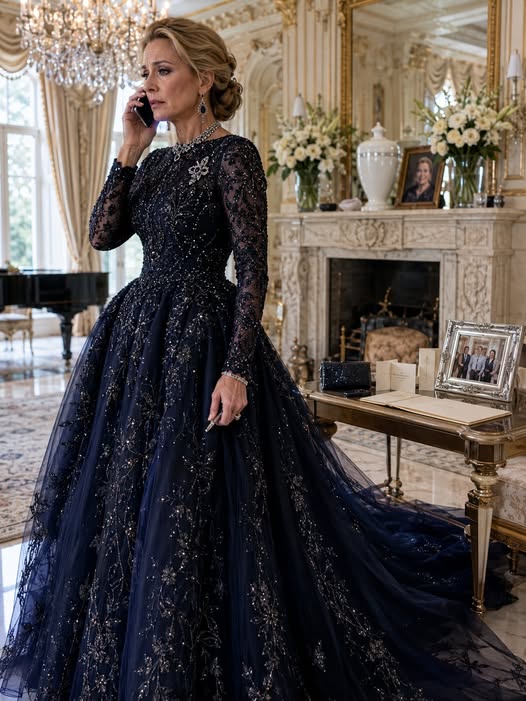
“I called my husband 30 times to say his mom was critical, but he was on an island with his mistress. I said goodbye in the ER, held the funeral, quietly left my ring and divorce papers, and vanished.
“Stop calling me like a lunatic, Clarissa! I am drowning in critical negotiations.”
My husband’s irritated voice echoed through the speaker, slicing through the suffocating silence of our living room.
But beneath his manufactured annoyance, I distinctly heard the rhythmic crash of ocean waves and the champagne-soaked laughter of a young woman.
I didn’t scream. I simply stared at the pristine white urn resting on the fireplace mantle.
It cradled the fresh ashes of Evelyn, his mother, whom I had meticulously cared for over the last two decades.
While Julian faked a business trip to sip cocktails with his mistress in Hawaii, he had no idea his biological mother had drawn her final breath.
He had no idea I had handled her cremation entirely alone.
My tears had completely dried up the night before in the fluorescent glare of the emergency room.
“Evelyn, please stay with me,” I had begged, gripping her paralyzed hand while dialing Julian for the thirtieth time. Straight to voicemail. “I am so sorry, Mom. I can’t reach him,” I sobbed, collapsing against her hospital bed.
That was when the impossible happened.
Evelyn’s paralyzed fingers suddenly twitched, gripping my hand with a terrifying, desperate strength.
Beneath her oxygen mask, her pale lips moved.
No sound escaped, but after twenty years, I read her silent words perfectly:
No more crying. It’s time.
Summoning the absolute last ounce of her fading life force, she pressed a jagged, freezing object into my palm.
As the heart monitor flatlined into an endless, droning hum, I slowly opened my hand.
It was a tiny silver key—a secret she had kept pinned to her undergarments for years.
Her final, piercing gaze delivered an unmistakable mandate.
The dying mother had just handed me the exact weapon I needed to absolutely annihilate her own traitorous son…

For several seconds, I remained frozen beside Evelyn’s hospital bed, the tiny silver key cutting into my palm.
A nurse quietly switched off the monitor.
Another pulled the white sheet higher over Evelyn’s chest.
Someone touched my shoulder and asked whether there was anyone they could call.
I almost laughed.
I had called the only person who should have been there thirty times.
He had chosen not to answer.
“No,” I whispered. “There is no one.”
The key was old, tarnished around the teeth, with a small oval tag attached by a thin metal ring. Three numbers had been engraved into its surface.
I recognized them immediately.
Evelyn had kept a private safe-deposit box at Harbor National Bank for as long as I had known her. She once told Julian it contained nothing except his father’s military medals and several pieces of costume jewelry.
Julian had laughed and said he would sort through it after she died.
He never asked which branch held the box.
He never asked whether she needed help renewing it.
He never asked about anything unless he believed it could benefit him.
I closed my fingers around the key and leaned forward to kiss Evelyn’s forehead.
“I understand,” I said.
Her skin was already cooling.
“I promise.”
The next morning, while Julian lounged beneath the Hawaiian sun and complained about my calls, I sat across from the funeral director and selected an urn.
I chose white marble because Evelyn had always loved white roses.
I approved the cremation.
I signed every document.
I called the church, arranged a small service, ordered flowers, contacted the few friends who had remained loyal to her, and wrote the obituary myself.
I did everything a devoted son should have done.
Julian did nothing.
Not because he could not.
Because he did not know.
And he did not know because he had decided that my voice was an inconvenience.
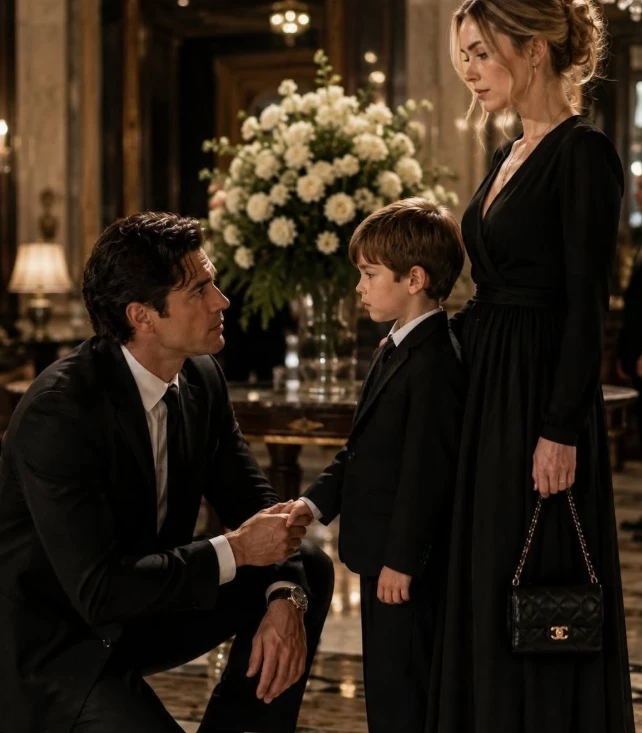
The funeral took place two days later.
Sixteen people attended.
Julian’s name was printed in the obituary, but he was not beside me when Evelyn’s closest friend described her kindness.
He was not there when the pastor spoke about devotion.
He was not there when I carried his mother’s ashes from the chapel.
He was not there when the last white rose was placed beside her photograph.
During the service, my phone vibrated twice.
The first message came from Julian.
May you like



Landing another major contract. Extend my trip by three days. Stop being dramatic.
The second arrived from a number I did not recognize.
A photograph appeared on the screen.
Julian stood barefoot on a beach, wearing white linen trousers and an open shirt. A woman in a red bikini had wrapped both arms around his waist. His mouth was pressed against her neck.
The message beneath the photograph contained four words.
He chose me, Clarissa.
I looked at Evelyn’s portrait on the altar.
Then I deleted the photograph, silenced my phone, and returned my attention to the service.
For the first time in twenty-two years, Julian’s betrayal did not break me.
It clarified me.
After the funeral, I drove directly to Harbor National Bank.
The building stood on a quiet corner in downtown Boston, its limestone exterior darkened by decades of winter storms. Evelyn had opened her account there before Julian was born.
At the reception desk, I gave the manager my identification and placed the silver key on the polished wood.
“I need access to box 317.”
The manager, a gray-haired woman named Mrs. Whitmore, studied the key and then looked at me with unexpected recognition.
“You are Clarissa Vale.”
“Yes.”
Her expression softened.
“Mrs. Evelyn Vale left instructions concerning you.”
My pulse quickened.
“What instructions?”
“She asked us to contact her attorney if you ever arrived with that key.”
Mrs. Whitmore led me into a private conference room and offered me water. Ten minutes later, an elderly attorney entered carrying a leather briefcase.
I knew him.
Samuel Harrow had handled the Vale family’s legal affairs for nearly forty years. Julian always described him as an obsolete relic who should have retired before the invention of email.
Samuel closed the door behind him.
“I am sorry about Evelyn,” he said.
“Thank you.”
“Was Julian with her?”
The question was gentle, but the truth still tasted bitter.
“No.”
Samuel lowered his eyes for a moment.
“I suspected he would not be.”
He sat across from me and removed a sealed envelope from his briefcase.
“Evelyn prepared this nine months ago. She instructed me to give it to you only if you presented the key.”
My name was written across the envelope in Evelyn’s precise handwriting.
I broke the seal.
Inside was a single page.
My dearest Clarissa,
If you are reading this, then my time has ended, and Julian has failed the final test I prayed he would somehow pass.
You have spent twenty years protecting this family while my son spent those same years believing your loyalty made you weak.
I allowed him to believe the Vale fortune belonged to him by birth.
It does not.
The controlling assets were mine.
I have transferred them to the one person who understood that family is an obligation, not an entitlement.
You.
Do not save Julian from the consequences of becoming his father.
Do not cry for a man who only notices your absence when he needs something.
Use the key.
Take your life back.
With all the love a mother could give,
Evelyn
I read the letter twice.
Then a third time.
“What controlling assets?” I asked.
Samuel opened his briefcase.
“The Vale family trust owns forty-one percent of Vale Maritime Holdings, the commercial properties in Boston and Providence, the family residence, and several investment accounts.”
I stared at him.
Julian had always claimed the trust would become his after Evelyn’s death.
Samuel continued.
“Evelyn amended the trust last year. You are now the primary beneficiary and controlling trustee.”
My breath caught.
“What about Julian?”
“He receives a restricted annual allowance.”
“How restricted?”
“Fifty thousand dollars per year, provided he does not challenge the trust, misuse company assets, or engage in conduct that damages the family corporation.”
Julian spent more than fifty thousand dollars in a month.
His private-club membership alone cost almost half of that.
“There is more,” Samuel said.
He placed several photographs, bank statements, and printed emails on the table.
The woman in the red bikini was named Vanessa Cole.
She was twenty-eight years old.
She worked as a junior marketing consultant for one of Vale Maritime’s subsidiaries.
Julian had been paying for her apartment through a company vendor account.
The Hawaiian villa, private flights, jewelry, and transfers had also been charged to corporate accounts.
The total exceeded eight hundred thousand dollars.
My stomach turned.
“How long?”
“Fourteen months, based on the records we have.”
Fourteen months.
During those months, Julian had complained whenever I paid for Evelyn’s medication.
He had accused me of wasting money when I hired a nighttime caregiver after her stroke.
He had refused to renovate the downstairs bathroom for wheelchair access because he said the house should not be transformed into a hospital.
Yet he had spent company money on villas and diamonds for his mistress.
Samuel slid one final document toward me.
It was Evelyn’s signed declaration.
She had discovered the affair months earlier.
She had also discovered financial misconduct.
She had confronted Julian privately and warned him to stop.
He responded by asking his doctor to evaluate whether she was mentally competent.
“He tried to have her declared incapable?” I whispered.
Samuel’s jaw tightened.
“He planned to remove her as trustee.”
The room seemed to tilt beneath me.
Evelyn’s final months replayed in my mind.
Her frustration when Julian refused to visit.
Her insistence that I remain near her whenever legal documents arrived.
The terror in her eyes whenever Julian mentioned moving her into a facility.
She had not been confused.
She had been trapped inside a failing body while her son waited to take control of everything she owned.
My grief transformed into something colder.
“What is in the safe-deposit box?”
Mrs. Whitmore escorted us downstairs.
The vault door opened with a heavy mechanical groan.
Box 317 was long and narrow.
Inside were Evelyn’s jewelry, her husband’s medals, property deeds, a flash drive, and a second envelope marked:
For the board.
The flash drive contained recordings.
In one, Julian’s voice was unmistakable.
“Once she is declared incompetent, I control the trust. Clarissa will sign whatever I put in front of her. She always does.”
Vanessa laughed.
“And after that?”
“After that, I move Mother into a facility, divorce Clarissa, and restructure everything.”
“You’re sure your wife won’t fight?”
“Clarissa doesn’t fight. She survives whatever I give her and calls it love.”
I stopped the recording.
For a moment, I could not breathe.
Samuel reached toward the laptop, but I raised my hand.
“No. Play the rest.”
There were seven recordings.
In them, Julian mocked my clothes, my loyalty, my age, and the years I had spent caring for his mother.
He described me as convenient.
Predictable.
Replaceable.
He promised Vanessa that our home would belong to her before Christmas.
He even discussed placing hidden debts in my name before filing for divorce.
By the time the last recording ended, my hands were perfectly steady.
“What happens now?” Samuel asked.
I looked at Evelyn’s letter again.
Do not save Julian from the consequences.
“I want an emergency board meeting tomorrow morning.”
Samuel nodded.
“And your marriage?”
“I need divorce papers.”
“You should understand that timing matters. Julian may try to conceal assets once he learns about the trust.”
“Then he will not learn until everything is secured.”
For the next forty-eight hours, I did not sleep.
I transferred trustee authority.
I froze unauthorized corporate expense accounts.
I revoked Julian’s access to the company aircraft.
I changed the passwords on the trust’s financial systems.
I asked the board’s audit committee to begin a formal investigation.
Then I met with a divorce attorney and documented twenty-two years of marriage.
The house Julian believed was his was owned by the trust.
The cars were leased through the company.
The vacation properties belonged to corporate subsidiaries.
Even his beloved yacht was registered to Vale Maritime.
Julian personally owned almost nothing.
He had lived like a king inside an empire that had never legally belonged to him.
The board meeting began at nine on Monday morning.
Julian was scheduled to return that afternoon.
Seven directors gathered in the executive conference room. Samuel sat beside me. The company’s general counsel occupied the chair on my other side.
Some directors looked confused when I entered.
Others already knew.
At precisely nine, I placed Evelyn’s death certificate on the table.
“My mother-in-law died four days ago,” I began.
Silence settled across the room.
“I called Julian thirty times while she was in critical condition. He did not answer because he was in Hawaii with a company employee.”
The general counsel distributed the evidence.
Hotel invoices.
Flight records.
Apartment payments.
Jewelry purchases.
Transfers.
Photographs.
Finally, the recordings played.
Julian’s voice filled the conference room.
Clarissa doesn’t fight.
By the end, no one looked at me with pity.
They looked horrified.
The board voted unanimously to suspend Julian as chief executive pending the investigation.
His company cards were canceled.
His access credentials were revoked.
His authority over employees and financial accounts ended immediately.
The internal investigation was referred to outside counsel.
Then the board recognized me as controlling trustee and interim chair.
At 11:17 a.m., my phone began vibrating.
Julian.
I let it ring.
He called again.
And again.
By noon, he had called twenty-three times.
I almost admired the symmetry.
At 12:06, he finally left a voicemail.
“Clarissa, my company card isn’t working. The airline says the corporate flight has been canceled. Call me immediately.”
No mention of his mother.
No concern about my thirty calls.
Only the card.
Only the plane.
Only himself.
At 12:18, another voicemail arrived.
“What did you do? Someone deactivated my company credentials. I have a major meeting tomorrow.”
At 12:31, his voice changed.
“Where is my mother? I called the house, and no one answered.”
I listened to that message twice.
Not because it moved me.
Because it was the first time fear entered his voice.
At 1:04, Vanessa called.
I did not answer.
At 1:17, she sent a message.
Julian says you froze everything. You can’t do this to us.
Us.
I blocked her number.
Julian returned to Boston the following evening on a commercial flight he purchased with his personal credit card.
By then, Evelyn’s urn was resting on the fireplace mantle.
My wedding ring lay beside it.
The divorce papers were arranged neatly on the dining-room table.
I had packed one suitcase.
Everything else I wanted had already been moved to a quiet townhouse in Beacon Hill that Evelyn had secretly purchased years earlier.
The security cameras showed Julian arriving shortly after ten.
He tried his key.
It no longer worked.
The house belonged to the trust, and as trustee, I had changed the locks.
He pounded on the door until the security guard admitted him under my instructions.
I watched remotely from the townhouse.
Julian stormed through the foyer, shouting my name.
He stopped when he saw the urn.
For the first time, the arrogance left his face.
He approached the fireplace slowly.
His eyes moved from the urn to Evelyn’s photograph, then to my ring.
“No,” he whispered.
On the dining table, he found the funeral program.
Evelyn Vale.
Beloved mother and friend.
The date of death was printed beneath her name.
Julian stared at it.
Then he checked his phone.
He scrolled through my calls.
Thirty unanswered attempts.
His knees appeared to weaken.
He lowered himself into a chair and pressed both hands over his face.
I wondered whether he was grieving for his mother or for the realization that his neglect could no longer be disguised.
Then he saw the divorce papers.
The grief disappeared.
He called me immediately.
I answered on the fourth ring.
“Clarissa.”
His voice cracked around my name.
“Where are you?”
“Somewhere peaceful.”
“My mother is dead.”
“Yes.”
“Why didn’t you tell me?”
A quiet laugh escaped me.
“I called you thirty times.”
“You should have texted.”
“I did.”
“You should have called the hotel.”
“I didn’t know which hotel you were using for your critical negotiations.”
Silence.
Then came the familiar shift.
The softening voice.
The practiced remorse.
“Clarissa, listen to me. I made a terrible mistake.”
“You made hundreds of choices.”
“It wasn’t what it looked like.”
“I saw the photographs.”
“Vanessa meant nothing.”
“Eight hundred thousand dollars suggests otherwise.”
He inhaled sharply.
“Who told you that?”
“Your mother.”
Another silence.
I imagined him looking toward the urn.
“What are you talking about?”
“She knew about Vanessa. She knew about the company money. She knew you tried to have her declared incompetent.”
“That is not true.”
“I heard the recordings.”
His breathing changed.
“What recordings?”
“The ones she kept in box 317.”
He said nothing.
I continued.
“She left me control of the trust.”
“No.”
“The board suspended you yesterday.”
“No.”
“The audit has begun.”
“Clarissa, you don’t understand the company.”
“I understand it well enough to know that billing your mistress’s jewelry to a maritime logistics account is not legitimate transportation expenditure.”
His voice rose.
“That company is mine!”
“It was Evelyn’s.”
“I am her son!”
“And I was the person holding her hand when she died.”
The words struck him into silence.
I did not raise my voice.
I did not need to.
“She asked for you,” I said. “Until she could no longer speak, she looked toward the door every time it opened. I kept telling her you would come. I kept believing that eventually you would answer.”
“Stop.”
“I begged her to stay alive while you told me to stop calling like a lunatic.”
“Clarissa, stop.”
“She died knowing exactly where you were.”
A broken sound escaped him.
For one dangerous second, the wife I had been for twenty-two years wanted to comfort him.
Then I remembered his laughter on the recording.
Clarissa doesn’t fight.
I looked around my new townhouse.
Sunlight streamed across hardwood floors. Evelyn’s favorite white roses stood in a vase beside the window. My suitcase was unpacked. My future was no longer waiting for permission.
“I left the divorce papers on the table,” I said.
“We can fix this.”
“No.”
“I love you.”
“You love being forgiven.”
“That is not fair.”
“Fair was your mother getting one final moment with her son. Fair was me being treated like your wife instead of an unpaid caretaker. Fair was company employees keeping their jobs while you spent corporate money on your mistress.”
“I will end it with Vanessa.”
“It already ended.”
“What does that mean?”
“Her employment was terminated after the audit confirmed she knowingly accepted company-funded benefits. The villa removed both of you when the payment guarantee was canceled.”
He exhaled sharply.
“You stranded me.”
“You were on an island. Not at war.”
“You humiliated me.”
“No, Julian. I documented you.”
His anger returned fully then.
“You think you can run my family’s empire?”
“I don’t want your empire.”
“Then give it back.”
“It was never yours.”
“I will challenge the trust.”
“You can. But under its terms, filing an unsuccessful challenge terminates your annual allowance.”
Samuel had advised me not to reveal that provision until necessary.
The silence on the line told me it had achieved its purpose.
“You planned this,” Julian whispered.
“No. Evelyn did.”
“You manipulated her.”
“I changed her clothes. I fed her. I bathed her. I attended every medical appointment. I sat with her through nights when she was afraid she would not wake up. You visited three times in fourteen months.”
“I was working.”
“You were stealing.”
“She was my mother.”
“Yes. And you abandoned her.”
His voice collapsed.
“What do you want from me?”
Nothing.
The answer arrived so quickly that it surprised me.
For twenty-two years, I had wanted apologies, affection, gratitude, attention, honesty, and one simple indication that my devotion mattered.
Now I wanted nothing from him.
“I want you to sign the divorce papers,” I said. “I want you to cooperate with the audit. And I want you to stop contacting me except through our attorneys.”
“You can’t disappear after twenty-two years.”
“I disappeared inside our marriage long before I left the house.”
“Clarissa—”
“Goodbye, Julian.”
I ended the call.
The divorce took six months.
Julian challenged almost everything except the trust.
He accused me of alienation, manipulation, financial cruelty, and emotional abandonment.
But accusations did not outweigh documents.
The corporate investigation found that he had misappropriated more than one million dollars over three years. Several expenses had been disguised through false vendors. He avoided prison by accepting a settlement that required repayment, resignation, and cooperation with regulators.
He sold the only investments held solely in his name.
He surrendered his club memberships.
He moved from the family estate into a rented apartment.
Vanessa left him before the investigation concluded.
Apparently, love became less convincing without private flights and oceanfront villas.
The board appointed an experienced chief executive, and I remained chair long enough to stabilize the company. I had no desire to become Julian’s replacement.
I wanted to become myself.
Under my direction, Vale Maritime repaid the improperly used funds to its operating accounts and created an elder-care benefit for employees supporting sick parents.
We named it the Evelyn Vale Family Care Program.
At the first board meeting after its approval, I placed Evelyn’s silver key beside my folder.
Not as a weapon.
As a reminder.
Keys do not destroy lives.
They open what people work hardest to keep hidden.
One year after Evelyn’s death, I returned to the small garden behind the church where her memorial plaque had been installed.
I carried white roses.
The morning was bright and cold. Autumn leaves moved across the stone path.
I placed the flowers beneath her name.
“You were right,” I whispered. “It was time.”
Footsteps sounded behind me.
I turned.
Julian stood at the edge of the garden.
He looked older. His expensive suits had been replaced by a plain dark coat. The arrogance in his posture was gone.
“I didn’t know you would be here,” he said.
“I come every year.”
He stared at the plaque.
“I haven’t been able to come before.”
I said nothing.
After a moment, he continued.
“I kept thinking that if I stayed away, I wouldn’t have to remember what I did.”
“You mean what you didn’t do.”
His eyes lowered.
“Yes.”
He approached the memorial but stopped several feet from me.
“I listened to your voicemail again,” he said. “The one you left from the hospital.”
I remembered it.
Julian, please answer. Your mother is fading. She needs you.
“I saved it,” he continued. “I don’t know why.”
“Perhaps because it is the last time you had a chance to choose differently.”
He closed his eyes.
“I was cruel to you.”
“Yes.”
“I thought you would always be there.”
“I was.”
“I know.”
For once, he did not defend himself.
He did not blame Vanessa.
He did not blame pressure, alcohol, childhood wounds, or ambition.
He simply stood beside his mother’s grave and faced the truth.
“I’m sorry,” he said.
The apology came too late to repair anything.
But it no longer had the power to wound me.
“I hope you become someone who deserves forgiveness,” I replied.
“Do you forgive me?”
I looked at him carefully.
There had been a time when I believed forgiveness meant reopening the door.
Now I understood that it could mean closing the door without carrying hatred away from it.
“I no longer wake up angry,” I said. “That is all I can give you.”
He nodded slowly.
It was not the answer he wanted.
But for the first time, he accepted an answer that did not serve him.
I walked away from the garden alone.
Not abandoned.
Not discarded.
Alone.
There was a difference.
My life afterward was quieter than the one I had imagined in my youth, but it was also richer.
I traveled to places Julian had promised we would visit someday.
I took a painting class.
I reconnected with friends I had neglected while managing his life and Evelyn’s care.
I learned to sit in a restaurant by myself without feeling watched.
I learned that silence could be peaceful instead of punishing.
And each year, on the anniversary of Evelyn’s death, I opened the small wooden box where I kept the silver key.
The metal remained cold.
The edges remained jagged.
But it no longer felt like a weapon.
It felt like permission.
Permission to stop begging.
Permission to stop explaining.
Permission to stop confusing endurance with love.
Julian once believed I would survive anything he gave me and call it devotion.
He was almost right.
I did survive.
But I no longer called it love.
I called it the life I escaped.
And the woman who placed the key in my hand with her dying breath did not destroy her son.
She simply made certain that, for once, he could not escape the consequences of destroying himself.