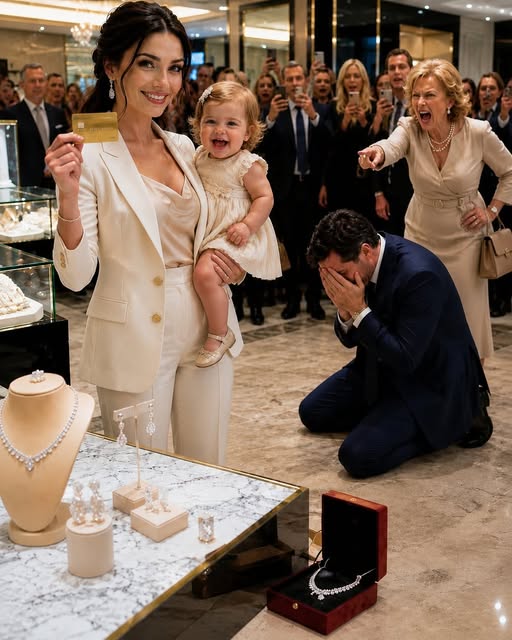
The minute my divorce became official, I canceled my ex-mother-in-law’s credit card. Hours later, my ex-husband called screaming because her $50,000 Cartier purchase had been declined in front of a ballroom full of people. By sunrise, he was drilling through my front door, convinced he could silence me before I discovered the crime that would destroy his entire life.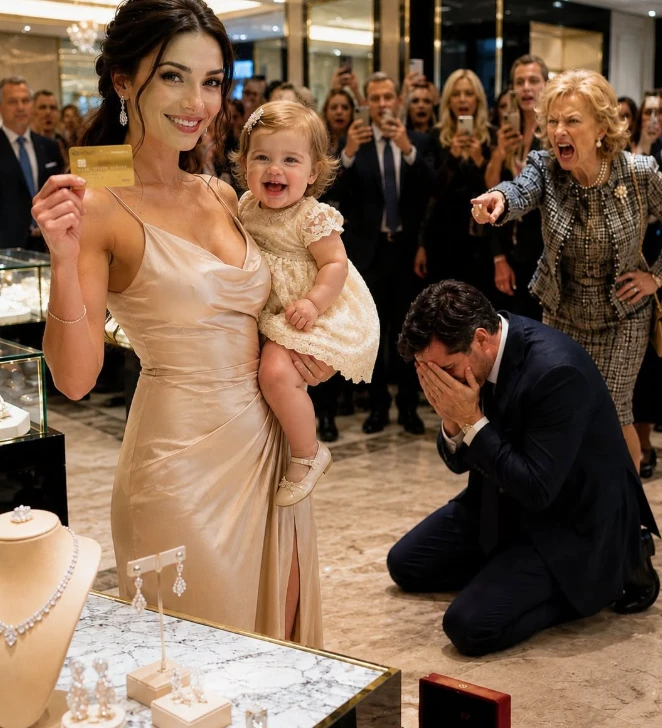
The ink on my divorce papers was barely dry when my phone lit up.
**Brandon Hawthorne.**
I answered once.
That was all it took.
“”What the hell did you do, Olivia?”” he shouted so loudly I had to pull the phone away from my ear. “”My mother was humiliated in front of everyone!””
I stood alone in my penthouse kitchen, sipping espresso and enjoying the first real silence I’d experienced in years.
“”What happened?”” I asked calmly.
“”She won a fifty-thousand-dollar Cartier necklace at a charity auction, and her card was declined in front of two hundred guests!””
For five exhausting years, I had financed Margaret Hawthorne’s luxury lifestyle. Designer handbags. First-class vacations. Jewelry. Spa weekends. In return, she treated me like I was nothing more than an outsider who happened to pay the bills.
I had never been family.
I had been an unlimited credit card with a heartbeat.
“”If your name isn’t on the account, Brandon,”” I replied, “”you don’t get to spend the money. The card is canceled… and so is this conversation.””
I ended the call.
Blocked his number.
And believed that was the end of it.
I couldn’t have been more wrong.
At exactly 6:42 the next morning, I woke to a sound that made my blood run cold.
A power drill.
Not knocking.
Not a doorbell.
A drill chewing straight through my deadbolt.
I grabbed my phone and opened the security camera feed.
There stood Margaret, furious enough to frighten me even through a screen. Beside her, Brandon was frantically talking to a locksmith.
“”Drill it!”” he yelled. “”My wife is having a psychiatric breakdown after the divorce. We have to get inside before she hurts herself!””
My heart slammed against my ribs.
He was inventing a mental health emergency to trick someone into breaking into my home.
The problem for Brandon was that he thought I was asleep upstairs.
I wasn’t.
I was fully dressed, sitting in my home office with my laptop open.
For the past ten minutes, I had been leading a live board meeting with eight senior partners from Sterling Point Capital, the venture capital firm where I served as managing partner.
I didn’t panic.
Instead, I quietly rotated my webcam toward the front entrance.
If Brandon wanted an audience…
I was happy to give him one.
The drill punched through the lock.
The front door burst open.
Every second was captured live and automatically recorded on the company’s secure servers while some of the most influential investors in the country watched my ex-husband illegally force his way into my home.
By the time the police arrived, Brandon was sweating through his expensive suit, desperately insisting it was just a “”family misunderstanding.””
No one believed him.
Twenty minutes later, my attorney, Grace Parker, called.
I expected her to celebrate the evidence we had just captured.
Instead, her voice shook.
“”Olivia,”” she whispered, “”the break-in had nothing to do with the canceled credit card.””
A knot formed in my stomach.
“”I finished auditing your joint accounts.””
Silence.
Then she took a slow breath before saying the words that changed everything.
“”Brandon didn’t just steal your money… and if he’d gotten that laptop this morning, he would have erased the evidence of a crime so enormous he might have escaped with it forever.””
For one moment, I could not speak.
The city was waking beyond the glass walls of my penthouse. Morning sunlight stretched over Manhattan in clean gold lines, touching the coffee cup on my desk, the scattered board notes, the corner of my laptop Brandon had apparently been desperate enough to break into my home to reach.
My home.
My laptop.
My evidence.
“What crime?” I asked.
Grace did not answer immediately.
That frightened me more than if she had shouted.
Grace Parker had handled billion-dollar disputes without raising her voice. She had once cross-examined a hostile CEO for seven hours and left him apologizing to his own board. Nothing shook her.
But now, she sounded shaken.
“Olivia,” she said carefully, “I need you to listen to me. Do not open any files. Do not delete anything. Do not forward anything yourself. The forensic team is on its way. Your laptop is evidence now.”
I looked across the room at the laptop sitting on my desk.
Only an hour earlier, it had been a work tool.
Now it looked like a bomb.
“Grace,” I said, “tell me.”
A pause.
Then she exhaled.
“I found transfers from your joint investment account into three private entities. At first, I thought Brandon was hiding marital assets.”
“That wouldn’t exactly surprise me.”
“No,” she said. “But this is bigger. Much bigger. Those entities received money from your account, then routed funds through consulting agreements, real estate deposits, and offshore vendor payments.”
My hand tightened around the phone.
“How much?”
“From your accounts directly? Twelve point four million.”
The number hit hard.
Not because I could not survive it.
Because I had trusted him with access.
Because somewhere inside my marriage, while I was building companies, raising funds, saving failing ventures, and absorbing insults from his mother at every holiday dinner, Brandon had quietly treated my money like a door into something darker.
“Twelve million,” I repeated.
“That’s just what touched your accounts,” Grace said. “The full pattern appears to be closer to eighty million.”
The room seemed to tilt.
“Eighty?”
“Yes.”
I sat down slowly.
Through the glass wall of my office, I could see police officers still moving through the entryway. One photographed the ruined lock. Another spoke to the locksmith, whose face had gone gray once he realized the “family emergency” had been a lie.
May you like




Brandon sat in a dining chair near the foyer, hands cuffed in front of him, his expensive suit wrinkled, his perfect hair falling over his forehead.
Margaret stood nearby, wrapped in a white cashmere coat, still wearing the diamonds she had bought with years of my tolerance.
She was no longer shouting.
That, more than anything, told me she had begun to understand.
“Where did the eighty million come from?” I asked.
Grace’s voice dropped.
“Sterling Point portfolio companies.”
The air left my lungs.
“No.”
“I’m sorry.”
“No, Grace. That’s impossible. Brandon had no access to Sterling Point internal funds.”
“He didn’t need direct access. He had you.”
The words landed with surgical cruelty.
Not because Grace meant to hurt me.
Because truth often cuts cleanest when spoken by someone trying to save you.
I closed my eyes.
For five years, Brandon had resented my career.
Not openly at first.
At first, he praised it in public.
My wife, the genius investor.
My wife, the woman who sees value before anyone else does.
My wife, the managing partner.
People found it charming.
I did too.
Until praise became ownership.
Until he began showing up at dinners with founders and speaking like he had helped close the deals.
Until he started asking questions about valuations, acquisition timelines, bridge financing, liquidity windows.
Until he learned enough of my language to imitate competence.
I had thought he wanted to understand my world.
Now I realized he had been mapping it.
“Did he steal from Sterling Point?” I whispered.
“We don’t know yet. But it appears he may have used confidential information from your laptop and documents at home to front-run investments, pressure vendors, and create false advisory fees around portfolio transactions.”
My stomach turned.
“He used my work.”
“Yes.”
“Did anyone at Sterling know?”
“That is what we need to determine immediately.”
A knock sounded at my office door.
I looked up.
One of the senior partners from the board call stood in the doorway.
Martin Hale.
Seventy-one years old, silver hair, terrifyingly calm, worth more than several countries’ education budgets, and currently looking at me with the expression of a man who had just watched my ex-husband commit a felony on camera.
“Olivia,” he said, “we need to talk.”
Grace heard his voice.
“Put me on speaker.”
I did.
Martin stepped inside and closed the door behind him.
His eyes went to the laptop.
Then to me.
“I assume Grace has told you.”
“Some of it.”
He nodded.
“We’ve already frozen Brandon’s visitor credentials across all Sterling properties. IT has locked down your accounts, not because we suspect you, but because we need to preserve chain of custody.”
I nodded.
My throat felt too tight for words.
Martin’s voice softened slightly.
“Olivia, look at me.”
I did.
“You did not do this.”
That almost broke me.
Because somewhere deep inside, the guilt had already started.
How had I not seen it?
How many times had Brandon sat across from me at dinner, asking casual questions while stealing pieces of my world?
How many times had Margaret mocked me for being too busy while her son quietly used my exhaustion as camouflage?
How much damage had been done because I had mistaken marriage for safety?
Martin pulled out a chair and sat across from me.
“Your ex-husband broke into your home this morning in front of eight witnesses and a live recording. That tells me he was desperate. Desperate men make mistakes. Today, he made a large one.”
Grace spoke through the phone.
“I agree. The attempted break-in gives us leverage and probable cause pathways. But we need to move before his network knows what we know.”
“Network?” I asked.
Grace and Martin exchanged silence.
Even over speakerphone, I heard it.
“There’s someone else,” I said.
Martin folded his hands.
“We believe so.”
“Who?”
“We don’t know yet,” Grace said. “But Brandon is not sophisticated enough to design this structure alone.”
That part was obvious.
Brandon was clever in the way charming men often are.
Quick with people.
Fast with excuses.
Excellent at sensing weakness.
But financial architecture like this required discipline.
Tax knowledge.
Transaction timing.
Shell formation.
Compliance blind spots.
Someone had helped him.
Someone with access.
Someone who understood how to hide stolen water inside a river.
A sound rose outside the office.
Margaret’s voice.
“You have no right to keep me here. I want my attorney. I want my son.”
I stood.
Martin rose too.
“Olivia.”
“No,” I said. “I want to see her face.”
I walked out of the office before he could stop me.
The foyer looked like a crime scene because it was one.
The front door hung crookedly against its hinges. Splinters littered the polished floor. The drill sat inside an evidence bag. The locksmith was speaking to an officer with the haunted expression of a man realizing he had been tricked into helping commit a crime.
Brandon looked up when he saw me.
For a second, panic flashed across his face.
Then he did what Brandon always did.
He tried to become charming.
“Liv,” he said softly. “This got out of hand.”
I stared at him.
That nickname had once belonged to morning coffee, weekend trips, sleepy laughter, his hand finding mine beneath restaurant tables.
Now it sounded like a stolen key.
“Do not call me that.”
His mouth tightened.
“We need to talk privately.”
I almost laughed.
Privacy.
That was always where men like Brandon wanted truth to go before they strangled it.
“No.”
His eyes flicked toward the officers.
“You don’t understand what’s happening.”
“I understand you broke into my home.”
“I was worried about you.”
“You brought a locksmith.”
“You blocked my number.”
“I divorced you.”
His jaw flexed.
Margaret stepped forward.
“This is ridiculous. Olivia, stop performing. Brandon was concerned. You canceled my card out of spite, then refused to answer calls. What were we supposed to think?”
I looked at her.
Even in the middle of a police investigation, Margaret Hawthorne stood like a queen awaiting apologies.
Her silver hair was perfect.
Her lipstick untouched.
Her pearls luminous against her throat.
For five years, I had watched her glide through rooms on money I earned, insulting me with the confidence of a woman who believed access was entitlement.
She had called me ambitious like it was dirty.
Cold like it was shameful.
Unmaternal because I refused to pause my career to give Brandon heirs on her timeline.
She once told a dinner table full of donors, “Olivia is very useful in business. Less so at home.”
Everyone had laughed.
Including Brandon.
I smiled now.
It felt strange on my face.
“Margaret, your credit card was canceled because the divorce is final. Your son is not my husband. You are not my family. And my money is no longer your lifestyle.”
Her face reddened.
“You humiliated me.”
“No,” I said. “Cartier did.”
One of the officers coughed into his hand.
Brandon’s eyes sharpened.
“This is not about the card.”
I turned back to him.
“No. It isn’t.”
For the first time, real fear entered his face.
I stepped closer, staying far enough that the officers did not move.
“Grace finished the audit.”
The blood drained from his cheeks.
Margaret looked between us.
“What audit?”
Brandon did not answer.
That silence was the loudest confession in the room.
I watched him carefully.
The man who had screamed at me over a declined necklace.
The man who had invented a psychiatric crisis to break through my door.
The man who had planned to steal my laptop before sunrise.
Now he looked like a cornered animal.
“You don’t know what she thinks she found,” he said quickly.
Interesting.
Not denial.
Strategy.
“I know enough,” I said.
He leaned forward.
“Olivia, listen to me. Some of those transfers involved people you do not want to cross.”
Martin, standing behind me, went completely still.
Grace’s voice came from my phone.
“Brandon, I truly hope you understand this call is still active.”
His head snapped toward the phone in my hand.
I lifted it slightly.
“Grace is listening.”
His attorney mask shattered.
For one second, pure rage looked out through his eyes.
Then he sat back.
“I want counsel.”
“Smartest thing you’ve said all morning,” Grace replied.
The officers escorted Brandon out shortly afterward.
Margaret tried to follow him.
Another officer stopped her.
“Ma’am, we still have questions.”
She turned on me.
“This is your fault.”
I looked at her for a long time.
At the woman who had spent years teaching her son that love meant service, wives meant resources, and consequences were things other people endured.
“No, Margaret,” I said. “This is your invoice.”
Her expression cracked.
Only a little.
But I saw it.
By noon, my penthouse was no longer simply my home.
It was a secured evidence site.
Sterling Point’s forensic team arrived with sealed drives, chain-of-custody forms, imaging equipment, and the grave expressions of people who knew one mistake could destroy a case.
They copied my laptop.
My backup drives.
My home server.
My emails.
Every file Brandon might have touched.
I sat in the library with Grace, Martin, and two internal investigators while the walls of my old life were slowly dismantled.
“Tell me the worst,” I said.
Grace placed a folder on the table.
The label read:
Preliminary Forensic Financial Review: Hawthorne-Linked Entities.
My married name had never looked so ugly.
Grace opened it.
“Brandon created or controlled at least seven entities. Some directly. Some through associates. Their purpose appears to have been extracting funds from transactions connected to Sterling Point portfolio companies.”
“How?”
“Fake advisory contracts. Inflated vendor payments. Real estate pass-throughs. Procurement fees. In at least two cases, he appears to have used confidential acquisition timelines to buy into target-adjacent assets before public announcements.”
Martin’s mouth tightened.
“Front-running.”
“Yes,” Grace said. “Potential securities violations. Fraud. Wire fraud. Breach of fiduciary obligations, if any Sterling employee was involved.”
I looked down at the pages.
Names.
Dates.
Amounts.
I recognized fragments.
A logistics company we had saved from bankruptcy.
A biotech founder who cried when our investment kept payroll alive.
A clean energy startup I had personally championed against the committee’s initial skepticism.
Brandon had not just stolen from me.
He had fed on companies I had believed in.
The betrayal shifted shape.
It was no longer only marital.
It was professional.
Reputational.
Criminal.
He had turned my judgment into cover.
My credibility into bait.
My marriage into a tunnel.
“Who helped him?” I asked.
Grace tapped one page.
“We have a recurring signer on several consulting approvals. Initials only in the extracted metadata. M.H.”
Martin’s eyes narrowed.
“M.H.?”
Grace looked at him.
“That is why we are moving carefully.”
The room changed.
Martin Hale.
M.H.
For a second, I couldn’t breathe.
Martin saw it and stood.
“No,” he said firmly. “I did not approve payments to Brandon Hawthorne.”
Grace did not flinch.
“I’m not accusing you. I’m saying the metadata uses those initials.”
Martin’s face hardened.
“Then someone wanted it to point at me.”
That possibility landed with terrifying elegance.
A planted trail.
A scapegoat waiting.
If Brandon had gotten my laptop, maybe he would have erased one set of files and left another.
Maybe by sunrise, Martin would have been implicated.
Maybe I would have been too.
I thought of Brandon’s text before the break-in.
We have to get inside before she hurts herself.
Not just a lie.
A script.
If he had made me seem unstable, anything found later could be dismissed as manipulation, revenge, confusion.
He had not come only to erase evidence.
He had come to control the story before the evidence spoke.
My hands went cold.
Grace noticed.
“Olivia.”
“I’m fine.”
“No, you are not. But you are safe.”
Safe.
The word felt unfamiliar.
By evening, Sterling Point had retained outside counsel, notified insurers, and prepared preliminary disclosures to regulators pending forensic confirmation.
Everything had to be precise.
Too little transparency looked like concealment.
Too much too soon could create panic.
I knew the mechanics.
I had guided portfolio companies through crisis before.
But this time, the crisis had my ex-husband’s fingerprints all over it.
At 7:13 p.m., Brandon’s attorney called Grace.
She put him on speaker with my consent.
“Mr. Hawthorne is willing to discuss a confidential resolution,” the attorney said.
Grace smiled without warmth.
“A confidential resolution to breaking and entering, fraud, and potential securities crimes?”
“My client denies all criminal wrongdoing.”
“Of course he does.”
“He believes Ms. Hawthorne may be in possession of documents taken out of context.”
“Ms. Reed,” Grace corrected.
A silence followed.
“I’m sorry?”
“Her legal name is Olivia Reed again. The divorce is final.”
I had not expected that to affect me.
But it did.
Reed.
My father’s name.
My name before Brandon.
The name on my first scholarship application.
The name on my first business card.
The name I had rebuilt after signing away Hawthorne.
I pressed my lips together and looked out at the city until the burning behind my eyes passed.
The attorney continued.
“Mr. Hawthorne is concerned Ms. Reed’s emotional state may compromise—”
Grace cut him off.
“Careful.”
Another pause.
“Excuse me?”
“You are speaking on a recorded line to counsel for a woman whose ex-husband was filmed drilling through her deadbolt this morning while falsely claiming psychiatric emergency. I advise you to choose a different strategy.”
The attorney cleared his throat.
“We can discuss terms.”
“No,” Grace said. “You can discuss cooperation.”
The call ended quickly after that.
Brandon was not ready to cooperate.
Not yet.
Men like him had to lose several layers of arrogance before they recognized gravity.
Margaret was released after questioning, but not before police collected her phone.
She called three people from outside the precinct.
One was her attorney.
One was a society columnist she fed gossip to when it suited her.
The third was a number Grace’s investigator flagged within minutes.
A man named Victor Lane.
Former partner at Sterling Point.
Disgraced quietly five years earlier after a valuation leak scandal that never reached the press.
My stomach tightened when Grace said his name.
I remembered Victor.
Brilliant.
Vain.
Resentful.
He had hated me from the moment I made partner before him.
When he left, Brandon had called him “that bitter finance ghost.”
I had laughed.
Had they known each other?
Had Brandon pretended to dislike him?
Had Victor found my husband the perfect weak point?
By midnight, the puzzle began taking shape.
Victor had financial knowledge.
Brandon had proximity.
Margaret had social access and entitlement.
Together, they had built something ugly behind the velvet curtains of my marriage.
The next morning, federal agents arrived.
Not because of the Cartier card.
Not because of the broken lock.
Because money had crossed state lines, investors had been deceived, and confidential deal information appeared to have been exploited.
Brandon was taken into custody later that day.
Victor Lane disappeared for twelve hours, then was found at a private airport with two passports and three hard drives.
Margaret’s townhouse was searched under warrant.
The press caught only pieces at first.
Enough to make them hungry.
Venture Capital Executive’s Ex-Husband Arrested After Penthouse Break-In.
Then:
Financial Fraud Probe Expands Around Sterling Point Deals.
Then, finally:
Sources: Hawthorne Family Linked to Multi-Million-Dollar Investment Scheme.
For years, Margaret had treated society pages like scripture.
Now they read like sentencing notes.
Three weeks later, I walked into Sterling Point’s emergency partner meeting wearing a white suit and the Reed name on my badge.
Not Hawthorne.
Reed.
The boardroom was full.
Partners.
Outside counsel.
Forensic accountants.
Regulatory specialists.
Martin sat at the head of the table.
When I entered, everyone stood.
I hated that.
Then I understood it.
They were not standing because I had been betrayed.
They were standing because I had preserved the evidence that might save the firm.
Martin waited until I sat.
Then he spoke.
“We have preliminary confirmation. Olivia’s systems were targeted. Her credentials were accessed from an external device on multiple occasions while she was traveling. We have no evidence that she participated in or knowingly enabled the scheme.”
A breath moved around the room.
Maybe theirs.
Maybe mine.
He continued.
“We also have evidence that the perpetrators attempted to fabricate metadata implicating me and potentially Olivia.”
My fingers curled around the pen in front of me.
There it was.
The second crime inside the first.
Not merely theft.
Framing.
Reputation murder.
Grace glanced at me.
I nodded once.
She passed out copies of the timeline.
Clean.
Numbered.
Undeniable.
Brandon had underestimated many things.
My lawyers.
My firm.
My memory.
But most of all, he had underestimated the fact that women who fund entire households learn where every dollar goes.
The investigation lasted months.
Brandon tried to turn on Victor.
Victor tried to turn on Brandon.
Margaret claimed ignorance until prosecutors produced messages where she referred to me as “the door” and told Brandon, “Keep her calm until the next closing.”
The door.
Not wife.
Not daughter-in-law.
Not person.
A door.
Something to pass through on the way to money.
During one deposition, Brandon finally looked at me across the table and said, “You were never supposed to find out.”
I almost smiled.
“That was your business plan?”
His attorney objected.
Grace looked delighted.
By the time the criminal cases moved forward, the divorce seemed almost quaint.
A declined Cartier necklace.
A canceled card.
A screaming phone call.
The small humiliation that accidentally exposed a larger rot.
If Margaret had not tried to buy that necklace, Brandon might have waited.
If Brandon had not panicked, he might not have broken in.
If he had not broken in on camera during my board meeting, the firm might have spent weeks untangling suspicion.
But arrogance is impatient.
It cannot resist being obeyed immediately.
That was what destroyed him.
One year after the break-in, I returned to the penthouse after the front door had finally been replaced.
For months, I had lived elsewhere.
Hotels.
A serviced apartment.
Anywhere that did not smell like sawdust and fear.
But I refused to sell the penthouse.
Not because I was attached to it.
Because I would not let Brandon turn my home into a crime scene forever.
I redesigned the entryway first.
New door.
New locks.
New security.
New lighting.
The wall where the drill had splintered wood was covered now by a large painting from a young artist whose company Sterling had helped fund.
Bright color.
Sharp lines.
A woman standing in front of an open door, not entering or leaving, simply choosing.
I bought it the moment I saw it.
Margaret eventually pleaded guilty to reduced charges connected to conspiracy and obstruction. Her society friends sent flowers for two weeks, then stopped taking her calls.
Victor went to prison first.
Brandon followed six months later after a trial he insisted on and regretted by the third day.
The evidence from my laptop, the recorded break-in, the account trails, the planted metadata, and the messages were too much.
His charm, once so useful in dining rooms, performed poorly under oath.
At sentencing, he turned around once and looked at me.
For a second, I saw the man I had married.
Or maybe I saw the costume again.
He mouthed something.
I’m sorry.
I did not nod.
I did not cry.
I did not forgive him for his benefit.
Some apologies are only another attempt to be remembered kindly.
I gave him nothing.
Afterward, outside the courthouse, reporters shouted questions.
“Ms. Reed, do you feel vindicated?”
“Did you ever suspect your husband?”
“What will happen to Sterling Point now?”
I stopped at the top of the steps.
Grace touched my elbow.
“You don’t have to.”
“I know.”
I looked toward the cameras.
“My ex-husband believed access was ownership. He believed marriage gave him a key to my work, my money, my reputation, and my silence. He was wrong.”
The reporters quieted.
I continued.
“This case is not only about fraud. It is about what happens when powerful people assume the women around them are resources instead of witnesses.”
Then I walked away.
Six months later, Sterling Point announced a new internal integrity division focused on founder protection, insider-risk monitoring, and financial abuse vulnerabilities in closely held businesses.
Martin asked me to lead it.
I said yes.
Not because I wanted to spend my life thinking about Brandon’s crimes.
Because I wanted other people to find the locked doors before someone drilled through them.
On the first day in my new office, I placed three things on my desk.
A framed copy of my restored name.
Olivia Reed.
A small piece of the broken deadbolt, sealed in acrylic.
And the auction catalog from the night Margaret’s Cartier card was declined.
Grace raised an eyebrow when she saw it.
“Morbid?”
“Educational.”
She laughed.
I opened to the page with the necklace.
A fifty-thousand-dollar Cartier piece Margaret had believed she deserved because for years, nobody had told her no and meant it.
That necklace had done what no investigator had managed yet.
It had triggered the tantrum that exposed the crime.
I kept the catalog as a reminder.
Empires do not always fall from grand battles.
Sometimes they fall because a spoiled woman tries to buy diamonds with another woman’s money and discovers the card no longer works.
That evening, I went home to my penthouse.
The city glittered beyond the windows.
My espresso machine hummed in the kitchen.
My phone sat silent on the counter.
No Brandon.
No Margaret.
No screaming demands.
No unlocked access.
No one treating my peace like an inconvenience.
For the first time in years, the silence did not feel lonely.
It felt owned.
I stood in the entryway and looked at the new door.
Solid.
Beautiful.
Mine.
Then I locked it from the inside.
Not because I was afraid.
Because I could.