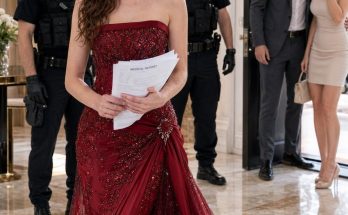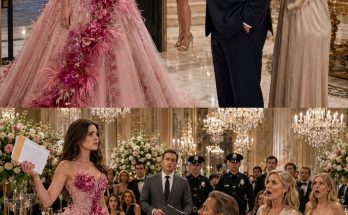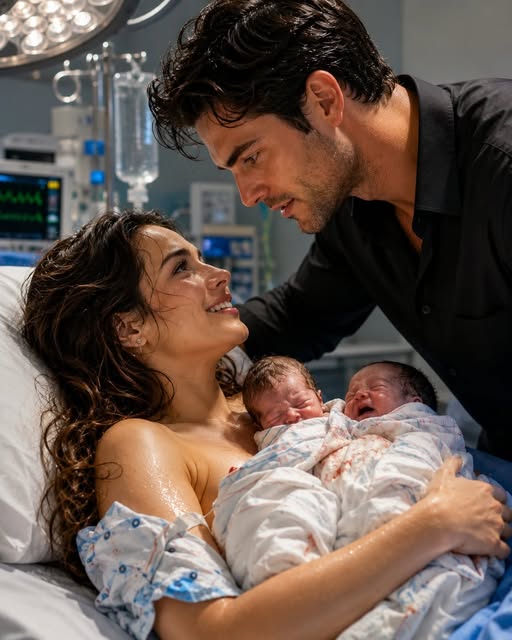
“She came into the hospital bleeding, carrying twins who might not survive the night. Then the surgeon stepped into the operating room, looked down at my face, and whispered my name—the same billionaire ex who had shattered my heart five years earlier.
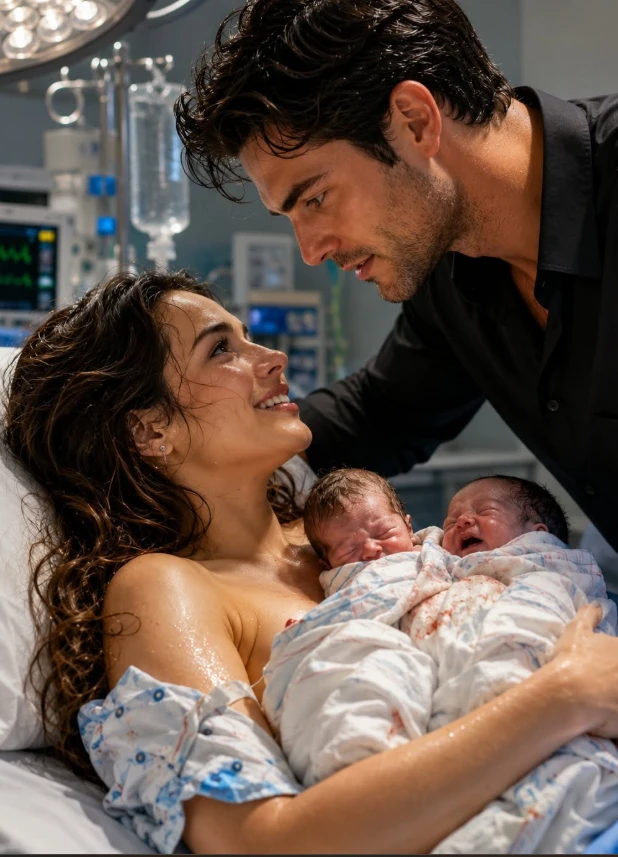
Rain hammered against the ambulance as the paramedics rushed me through the emergency entrance of St. Catherine’s Medical Center in downtown Chicago. I drifted in and out of consciousness, one trembling hand pressed against my swollen belly as if I could somehow protect my babies from the nightmare unfolding inside me.
“Thirty-two weeks,” one paramedic shouted while the gurney raced toward the elevator. “Twin pregnancy. Suspected placental abruption. Blood pressure crashing. She collapsed during her shift at a packaging warehouse in Cicero. Heavy bleeding. No family. No emergency contact.”
The voices around me faded in and out like echoes underwater. Somewhere nearby, a nurse pulled back the soaked blanket and quietly took in everything my body revealed—callused hands from endless work, an old burn scar on my arm, fading bruises no one had ever asked about, and a body far too exhausted to be carrying two babies.
“Get OB down here now!” someone yelled.
Three doors away, Dr. Ethan Caldwell had just finished reviewing a patient chart. After fourteen exhausting hours on his feet, he was still the calmest man in the hospital, moving with the confidence that had made him one of Chicago’s most respected maternal-fetal surgeons.
The Caldwell family owned a multibillion-dollar medical empire. They could have handed Ethan board seats, private jets, and endless wealth, but instead he had chosen to spend his life saving mothers and babies.
When the emergency call came, he never hesitated.
By the time he entered Labor and Delivery, the room had erupted into controlled chaos. Monitors screamed, nurses prepared instruments, and the anesthesiologist rushed to keep pace with the rapidly disappearing window to save us.
“What’s the status?” Ethan demanded.
“Severe placental abruption,” the resident answered. “Both babies are in distress. Maternal pressure is dropping.”
“Operating room now. Two units of uncrossmatched blood. Neonatal team standing by. We don’t wait.”
Everything happened so quickly that I barely felt the bed moving beneath me. My vision faded again as voices blended into one desperate blur, and then the bright surgical lights flooded over me.
Ethan scrubbed in without wasting a second. Bleeding mother. Twins in distress. Minutes to act. It was the kind of crisis he had faced countless times.
Then he walked into the operating room.
The nurse stepped aside.
He saw my face.
“Hannah…”
The word escaped before he could stop it.
No one else reacted. There wasn’t time. But for Ethan, the world had just stopped.
Five years disappeared in an instant.
He remembered the scholarship fundraiser where I had been serving champagne in a thrift-store sweater, the tiny apartment where we laughed over takeout dinners, and every impossible dream we once believed we could build together.
Then he remembered the night everything ended.
Outside his mother’s mansion, rain poured between us while he accused me of betraying him. I begged him to believe me, but he trusted elegant lies told by powerful people instead of the woman who loved him.
He walked away.
I disappeared from his life.
Now I was lying on his operating table, unconscious, bleeding to death, with two babies whose hearts were slowing by the second.
“Doctor?” the scrub nurse called.
Ethan blinked hard, forcing himself back into the present.
“Prep now,” he ordered, his voice turning cold and steady. “We’re losing both fetal heart rates.”
The room exploded into motion again, but I never heard it.
Somewhere beyond the darkness, Ethan stared at me through his surgical mask, and one terrifying thought crashed into him with enough force to steal his breath.
Could those twins be mine?
His jaw tightened as he held out his hand.
“Scalpel.”
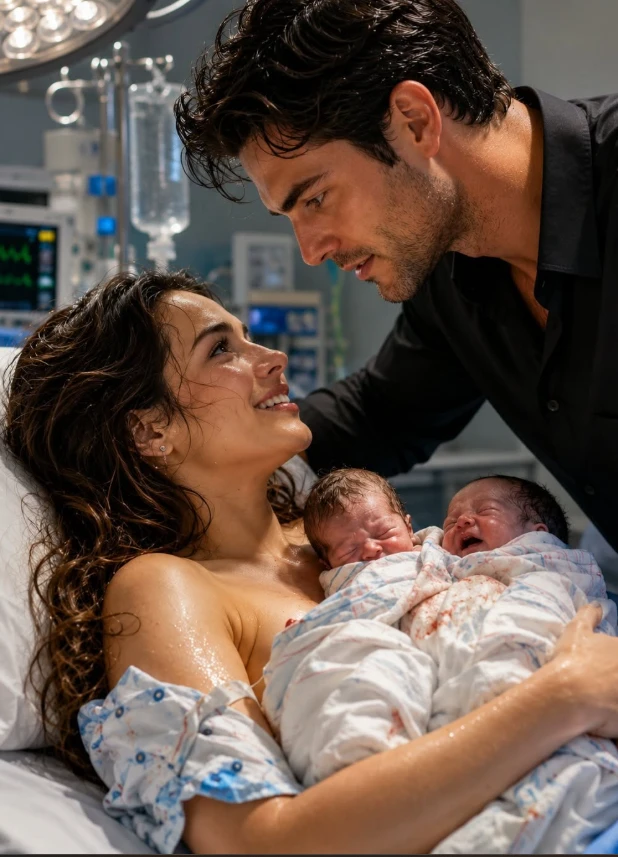
“Scalpel.”
The word left Ethan’s mouth with absolute steadiness.
Only his eyes betrayed him.
For one impossible second, the surgeon and the man existed in the same body and wanted opposite things.
The surgeon saw numbers.
Thirty-two weeks.
Severe placental abruption.
Maternal hypotension.
Two deteriorating fetal heart rates.
Active hemorrhage.
Minutes.
The man saw Hannah Clarke beneath the surgical lights.
The woman he had loved.
The woman he had accused.
The woman who had vanished five years earlier after standing in the rain outside his mother’s mansion and saying, “If you walk away from me tonight, Ethan, don’t come looking later just because you finally learn the truth.”
He had walked away.
Now there was blood beneath her.
Two babies inside her.
And no time for regret.
“Incision.”
The operating room moved.
Ethan moved with it.
His hands knew what to do even while some broken, irrational part of him kept screaming the same question.
Could they be mine?
The thought was absurd.
Five years.
He had not touched Hannah in five years.
Had not seen her.
Had not heard her voice.
Shock did strange things to mathematics.
He killed the thought immediately.
“Pressure?”
“Seventy-eight over forty-two.”
“Transfusion running?”
“Yes.”
“Second line?”
“In.”
“NICU?”
“Ready.”
Ethan did not look at Hannah’s face again.
Not because he could not bear it.
Because if he did, he might become Ethan Caldwell instead of Dr. Caldwell.
And Hannah did not need the man who had failed her.
She needed the surgeon who did not.
“Baby A first.”
The next ninety seconds became motion.
A premature infant emerged pale and frighteningly still.
“Boy.”
The neonatal team took him.
Ethan heard no cry.
His chest tightened.
“Come on.”
He should not have said it aloud.
Nobody noticed.
Then—
A tiny sound.
Weak.
Angry.
Alive.
“Heart rate improving.”
Ethan breathed once.
“Baby B.”
The second baby came faster.
A girl.
Smaller.
She did not cry.
The neonatal team moved around her.
Ventilation.
Stimulation.
Numbers.
Commands.
Ethan could not watch.
Hannah was still bleeding.
Too much.
“Uterus isn’t contracting.”
“More oxytocin.”
“Pressure falling.”
“Eighty systolic.”
“Blood.”
“Already on four.”
“Call massive transfusion protocol.”
The anesthesiologist looked toward him.
“Ethan.”
That was Dr. Priya Shah.
His colleague.
His friend.
One of only three people in the hospital who knew enough about his past to understand why hearing Hannah’s name mattered.
She had recognized it.
Not Hannah.
The name.
Priya’s eyes met his for half a second.
Are you capable of doing this?
Ethan answered without words.
Yes.
He had to be.
They controlled one source.
May you like



Then another.
Bleeding continued.
For several terrifying minutes, hysterectomy became a possibility.
Ethan hated that his mind could form the word while Hannah lay unconscious.
Not because fertility mattered more than life.
It did not.
Because five years earlier, Hannah had once told him she wanted a house full of children.
Four, she had said.
Maybe five.
He had laughed and asked whether she intended to bankrupt him in cereal.
She had thrown a pillow at him.
Now he did not know whether she had wanted these babies.
Whether she had planned them.
Whether someone waited for her at home.
Whether their father knew she was here.
He did not know anything.
That was his punishment.
“Balloon.”
Priya understood.
They worked.
Minutes stretched.
The bleeding slowed.
Not stopped.
Slowed.
Then more.
Then finally enough that numbers began moving in the right direction.
“Ninety-six over fifty-eight.”
Ethan exhaled.
Nobody celebrated.
Not yet.
“Baby A?”
Priya asked.
A neonatal nurse answered from across the room.
“On CPAP. Improving.”
“Baby B?”
“Intubated. Heart rate stable.”
Stable.
The most beautiful ordinary word Ethan had ever heard.
He finished repairing what could be repaired.
Preserved Hannah’s uterus.
For now.
He did not allow himself to attach emotion to that.
Then the operation ended.
Not the crisis.
The operation.
As the team prepared to transfer Hannah to intensive recovery, Ethan removed his gloves.
His hands were trembling.
Priya saw.
“Go wash.”
“I need to speak to NICU.”
“No.”
He looked at her.
She lowered her voice.
“You have a prior personal relationship with this patient.”
Nobody else was close enough to hear.
“It was emergent.”
“I know.”
“I was the attending available.”
“I know.”
“She would have died.”
“I know.”
Ethan swallowed.
Priya’s expression softened.
“You did your job.”
He looked toward Hannah.
“And now?”
“Now you disclose the conflict and step away from her ongoing care.”
His jaw tightened.
“What if she—”
“No.”
The word stopped him.
Priya continued.
“You can be whatever she allows you to be personally.”
“Not her surgeon anymore.”
Ethan closed his eyes.
She was right.
Of course she was.
“Take over.”
“I already am.”
He almost smiled.
“You’re unbearable.”
“You’re welcome.”
Then Priya looked at Hannah.
“Go find out who those babies belong to.”
Ethan’s face tightened.
“They belong to her.”
Priya nodded once.
“Good answer.”
I woke to a machine breathing beside me.
Not for me.
Somewhere.
Beeping.
Voices.
The smell came first.
Antiseptic.
Plastic.
Hospital.
Then pain.
Not sharp.
Heavy.
Deep.
My body felt as if someone had filled it with broken stone.
I tried to move.
A hand touched my shoulder.
I panicked.
My eyes flew open.
“Easy.”
Female voice.
Not him.
A woman in dark blue scrubs leaned over me.
“I’m Dr. Priya Shah.”
My mouth was dry.
“Babies.”
The word barely came out.
She understood.
“Alive.”
I closed my eyes.
The tears came before I could stop them.
Both?
I tried to ask.
Priya leaned closer.
“Both babies are alive.”
I began crying harder.
“One is breathing with noninvasive support.”
A pause.
“The smaller twin needed a breathing tube, but she is stable.”
She.
A girl.
I had known.
Not scientifically.
Just known.
“And him?”
“The boy is doing better.”
I tried to lift my head.
Pain dragged me back.
“Can I see them?”
“Not yet.”
Panic.
“No.”
“Hannah.”
“No, I need—”
“You lost a dangerous amount of blood.”
I stopped.
Memory returned in fragments.
Warehouse floor.
Warmth running down my legs.
Someone shouting my name.
The ambulance.
My babies kicking.
Then—
A voice.
A voice I had spent five years trying to forget.
Hannah.
My eyes opened.
“Who operated?”
Priya’s face changed.
Only slightly.
That told me before she answered.
“Dr. Ethan Caldwell performed the emergency delivery.”
My body went cold despite blankets.
“No.”
“He was the maternal-fetal surgeon on call and you required immediate surgery.”
“No.”
“Hannah.”
“Where is he?”
“Not in the room.”
That helped.
Barely.
“He has stepped away from your continuing medical care because of your prior personal history.”
He told them.
Of course.
Ethan had always been ethical when rules were written down.
It was people he struggled with.
“Does he know?”
Priya frowned.
“Know what?”
I looked away.
The babies.
No.
Of course not.
What was I even asking?
Know about Noah?
Know I married?
Know that the children belonged to a man who died before he could hold them?
Know that five years after Ethan accused me of selling his family’s secrets for money, I had become someone else’s wife?
Someone else’s widow?
Someone else’s almost-normal life?
My throat tightened.
“My husband.”
Priya became still.
“Do you want us to contact him?”
I closed my eyes.
“He’s dead.”
Silence.
“Oh.”
I hated sympathy.
Not because it was wrong.
Because it opened things.
“Four months.”
Priya pulled the chair closer but did not touch me.
“What was his name?”
“Noah Mercer.”
“Was he the babies’ father?”
“Yes.”
The answer hurt.
Still.
It would always hurt.
Priya nodded.
“I’m sorry.”
“Everyone says that.”
“Yes.”
I looked at her.
She did not apologize for apologizing.
Good.
“My phone?”
“You arrived with a bag. Security has it.”
“I need it.”
“I’ll have someone bring it.”
“Please.”
Priya looked at the monitors.
“Before that, I need to tell you what happened medically.”
I wanted to refuse.
Then thought of two tiny babies somewhere above or below me.
“Tell me.”
She did.
Placental abruption.
Emergency cesarean.
Severe hemorrhage.
Transfusion.
Medications.
A temporary device to control uterine bleeding.
Possible ICU observation.
Possible complications.
Possible additional surgery if bleeding restarted.
I listened.
The words floated.
Then one sentence landed.
“You are alive because the team moved very quickly.”
The team.
Not Ethan.
Good.
I could survive gratitude to a team.
“What about them?”
“The babies are thirty-two-week preterm infants.”
“I know.”
“They may need several weeks in NICU.”
“How sick?”
“The boy is currently stronger.”
My stomach tightened.
“And my daughter?”
“She is more fragile.”
“What does that mean?”
“She needed intubation.”
I gripped the sheet.
“But stable?”
“At this moment.”
“At this moment.”
Priya did not lie.
I appreciated that and hated her for it.
“Names?”
she asked.
I stared.
“We can keep Baby A and Baby B for now.”
“No.”
My voice cracked.
“Noah.”
Priya waited.
“The boy?”
“Yes.”
“Noah James Mercer.”
She smiled faintly.
“And your daughter?”
“June.”
My throat closed.
“June Elise Mercer.”
“Beautiful.”
Noah and June.
The names Noah and I had chosen at our kitchen table when I was nineteen weeks pregnant.
He had written them on the back of a grocery receipt because we had nothing else nearby.
Three weeks later, he died.
A semi-truck crossed the median on I-55.
His ambulance never reached the patient it was responding to.
I received the call at 2:13 in the morning.
Four months later, our children came into the world while I was unconscious.
Life had a vicious sense of timing.
“Can I see a picture?”
Priya nodded.
“I’ll arrange it.”
Then she hesitated.
“There is one more question.”
I knew.
“Ethan.”
“Yes.”
I looked at the ceiling.
“Does he know I’m awake?”
“Not yet.”
“Good.”
“Do you want him told?”
“No.”
The answer came too fast.
Priya did not challenge it.
“Do you want him prohibited from visiting?”
I looked at her.
Hospital rules.
Boundaries.
Choice.
Five years ago, I had not had enough of that.
“Yes.”
She nodded.
“I’ll document it.”
Then I changed my mind.
“No.”
Priya waited.
“I don’t know.”
“That’s allowed.”
I swallowed.
“Can I decide later?”
“Yes.”
There.
Simple.
No punishment for uncertainty.
“Later.”
“Okay.”
Ethan stood outside the NICU watching a respiratory therapist adjust the tiny mask over Baby A’s face.
Noah.
He did not know the name yet.
Only Baby A.
The boy’s chest rose and fell under translucent plastic.
A knitted blue cap covered his head.
His hands were impossibly small.
Across the room, Baby B lay inside another incubator with a breathing tube.
Ethan should not have been there.
Not as physician.
The neonatologist had permitted him only because he was technically part of the emergency team and had asked for a clinical update before completely withdrawing.
He told himself that was why he stayed thirty seconds longer than necessary.
Then forty.
Then sixty.
“Dr. Caldwell?”
He turned.
A NICU nurse held a clear belongings bag.
“Social work was trying to identify family.”
Ethan stared.
“Why are you telling me?”
“She has no listed emergency contact.”
“I’m no longer on her service.”
“I know.”
The nurse looked embarrassed.
“I just thought…”
Everyone in the hospital knew Ethan Caldwell.
They did not know Hannah.
That imbalance bothered him immediately.
“Give it to social work.”
“Yes, doctor.”
He walked away.
Then stopped.
“Wait.”
The nurse turned.
“Did they find identification?”
“Driver’s license.”
Name:
HANNAH MERCER.
Ethan felt the floor shift.
“Mercer?”
“Yes.”
Married.
Or had been.
The twins were Mercers.
Of course.
He had known logically they were not his.
Still, hearing the name closed some irrational door he had not admitted remained open.
“Anything else?”
“Insurance card.”
“Warehouse employee badge.”
“Wedding ring on a chain.”
His chest tightened.
“Thank you.”
He walked away.
The hospital corridor seemed suddenly too bright.
Five years ago Hannah Clarke had disappeared.
At some point, she became Hannah Mercer.
A wife.
Then somehow arrived alone.
No family.
No emergency contact.
He wanted to know everything.
That was exactly why he could not ask anyone professionally.
So he went to his office.
Closed the door.
Sat down.
And finally allowed himself to shake.
At 11:36 the next morning, my phone arrived.
Cracked screen.
Still working.
Seventeen missed calls from the warehouse.
Six from my supervisor.
Four from Noah’s mother.
That surprised me.
Eleanor Mercer had not spoken to me since Noah’s funeral.
She blamed me for keeping his ashes in Chicago instead of burying him in Wisconsin with his father.
Grief makes ownership arguments out of people.
There was also one voicemail from an unknown hospital extension.
I ignored it.
Then a text from a number I had deleted five years ago but still recognized instantly.
ETHAN: I know you asked for space. I will respect that. Your babies are alive. I’m sorry you had to wake up here and see me again. I won’t contact you further unless you ask.
I read it twice.
No explanation.
No request.
No “we need to talk.”
No demand that I thank him.
That made it harder.
I put the phone down.
Then picked it up again.
Typed:
Their names are Noah and June.
Deleted.
Typed again.
Baby A is Noah. Baby B is June.
Deleted.
Why did he need to know?
He didn’t.
Then my phone rang.
Eleanor Mercer.
I answered.
“Hannah?”
Her voice broke.
“Yes.”
“Oh my God.”
I closed my eyes.
“How did you know?”
“Your supervisor called Noah’s old station.”
Of course.
Even dead men leave networks.
“The babies?”
“Alive.”
She began crying.
I did too.
“Both?”
“Yes.”
“Can I come?”
The question shocked me.
We had spent four months barely tolerating each other through lawyers over Noah’s estate.
But now?
Noah had two children.
Her grandchildren.
“Yes.”
She sobbed.
“I’m leaving now.”
“Eleanor.”
“Yes?”
“No fighting.”
Silence.
“About what?”
“Anything.”
“I don’t have the strength.”
Her voice softened.
“No fighting.”
Good.
One problem at a time.
An hour later, Priya came in with a photograph.
Noah.
Tiny.
Pink.
Mask over nose.
One hand curled beside his cheek.
Then June.
Smaller.
More tubes.
Tape.
My heart stopped.
“What’s wrong?”
“Nothing new.”
“Why so many tubes?”
“She needs more support.”
“Can I go?”
“Not yet.”
I started crying.
“I need to touch her.”
“I know.”
“No.”
My voice rose.
“You don’t.”
Priya let me be angry.
Good.
“I carried them.”
“Yes.”
“I woke up and they were gone.”
“Yes.”
“You people tell me they’re alive and expect that to be enough.”
“No.”
That stopped me.
Priya’s voice softened.
“I expect it to be unbearable until you can see them.”
I cried harder.
Then she said:
“We’re aiming to get you upstairs later today if your bleeding remains controlled.”
I nodded.
Anything.
“Dr. Caldwell asked to be removed from all access beyond what is necessary to document the emergency surgery.”
I stared.
“Why are you telling me?”
“Because you may see his name in the chart and wonder.”
I looked away.
“He operated.”
“Yes.”
“Did he know it was me before he started?”
“Seconds before.”
My chest tightened.
“He still operated?”
“You were actively deteriorating.”
“There was no safe delay.”
I knew enough to understand.
“Did he hesitate?”
Priya thought.
“No.”
The answer hurt in a strange way.
Of course he did not.
Ethan had always been extraordinary in emergencies.
It was ordinary trust where he had failed.
Eleanor arrived at three.
She entered my room wearing a raincoat over sweatpants and looked at me like grief had aged her ten years since Noah’s funeral.
Her eyes went immediately to my abdomen.
Then face.
“Hannah.”
“Hi.”
She came to the bed.
Stopped.
“Can I hug you?”
That was new.
“Yes.”
She bent carefully.
We both cried.
For Noah.
For the twins.
For everything we had wasted fighting.
When she sat back, she looked embarrassed.
“I was awful.”
I stared.
“At the funeral.”
“Yes.”
“And after.”
“Yes.”
“I thought if Noah’s ashes were with you, I had nothing.”
My eyes burned.
“He loved you.”
“I know.”
“I wasn’t taking him.”
“I know now.”
She wiped her face.
“Can we start over?”
I looked at her.
“No.”
Her expression fell.
Then I continued.
“But we can start here.”
She nodded.
“Fair.”
That was enough.
When I told her the babies’ names, she covered her mouth.
Noah.
Of course.
June had been Noah’s grandmother’s name.
Eleanor cried again.
Then she noticed my phone.
“Who is Ethan Caldwell?”
Everything in me tightened.
“What?”
“His name was on the surgery update they gave me at the desk.”
Of course.
I looked away.
“No one.”
Eleanor watched.
“Doesn’t look like no one.”
“Old history.”
“The billionaire doctor?”
I gave her a look.
She shrugged.
“I read newspapers.”
“Don’t.”
“All right.”
And to her credit, she didn’t.
Not then.
The first time I saw June, I nearly stopped breathing.
They wheeled me into NICU at 8:14 that evening.
I was still weak enough that sitting upright made the room tilt.
A nurse pushed the chair.
Eleanor walked beside me.
Noah’s incubator came first.
I put my hand through the opening.
One finger.
He wrapped his entire hand around the tip.
That was enough to destroy me.
“Hi.”
My voice broke.
“Hi, baby.”
He moved.
Tiny.
Strong enough.
Then June.
I hated the tube.
Hated the machine.
Hated that the first time I saw my daughter’s face, tape covered part of it.
I put my hand inside.
The nurse showed me how to rest my palm gently against her back without stroking.
“Containment.”
I nodded.
I did what I was told.
“June.”
Her body shifted under my hand.
I cried silently.
Eleanor stood behind me.
Then somebody entered the NICU.
I knew before turning.
Some people remain recognizable by the way a room changes around them.
Ethan stopped near the far nurses’ station.
Not coming closer.
White coat.
Dark scrubs.
Exhausted.
Our eyes met.
Five years collapsed.
Again.
I looked away first.
He should leave.
He did.
Immediately.
No gesture.
No approach.
No attempt.
Just turned and walked out.
That hurt more than if he had stayed.
I hated myself for that.
Three days later, June came off the ventilator.
Two days after that, Noah no longer needed CPAP.
My bleeding stabilized.
I transferred out of high-dependency care.
Eleanor moved into a cheap hotel nearby and spent twelve hours a day at St. Catherine’s.
My warehouse supervisor brought flowers and a payroll envelope.
I stared.
“What’s this?”
“Collection.”
“No.”
“Hannah.”
“I can’t take—”
“Forty-three people contributed.”
My throat tightened.
People I thought barely noticed me.
Men on loading docks.
Women in packaging.
Forklift drivers.
The night-shift janitor.
I took it.
“Thank them.”
“You can thank them yourself when you come back.”
I almost laughed.
“Not soon.”
“We know.”
He looked uncomfortable.
Then:
“You should’ve told us doctor wanted you off your feet.”
I stared.
“How did you know?”
“Paramedic report had prenatal card.”
I looked away.
The obstetrician at the county clinic had told me at twenty-nine weeks to reduce physical strain.
Twins.
High blood pressure.
Placental concerns.
Reduced hours.
I had tried.
Then rent.
Noah’s life-insurance dispute.
The hospital debt from his death.
Funeral expenses.
Everything.
“I needed hours.”
My supervisor’s face tightened.
“We could’ve moved you to labeling.”
“Would’ve cut pay.”
“Not if I knew.”
I looked at him.
“You didn’t ask.”
He flinched.
Neither had I.
Both true.
He nodded.
“Fair.”
Then handed me an envelope from HR.
Paid medical leave.
Not charity.
A recently approved hardship policy.
Three weeks.
Not enough.
Still.
I cried after he left.
Because survival had trained me to expect every kindness to arrive with an invoice.
Sometimes it didn’t.
On the sixth day, Ethan’s sister came to see me.
Ava Caldwell.
I recognized her immediately.
She had been nineteen when Ethan and I dated.
Now twenty-four.
Elegant.
Still had the same nervous habit of twisting rings around her fingers.
She stopped in my doorway.
“Hannah.”
My body went cold.
“No.”
Her face crumpled.
“Please.”
“I don’t want Caldwell family visits.”
“I know.”
“Then why are you here?”
“Because Ethan doesn’t know I came.”
That made me laugh bitterly.
“Wonderful.”
Ava swallowed.
“And because I should have come five years ago.”
Silence.
Something in her face frightened me more than the words.
“What do you mean?”
She closed the door.
Not fully.
Left it open an inch.
Maybe instinct.
Maybe respect.
Then sat far from the bed.
“My mother lied.”
My heartbeat changed.
I stared.
Ava’s eyes filled.
“About you.”
I could not breathe.
Not because I was surprised.
Some part of me had always known.
But knowing privately and hearing confession are different things.
“What lie?”
She began crying.
“All of it.”
My hands went numb.
Five years earlier, Ethan had confronted me with evidence.
A bank account containing eighty thousand dollars.
Emails between me and a rival hospital group.
Documents from the Caldwell Foundation copied from restricted servers.
A photograph of me meeting a man named Grant Sloane outside a coffee shop.
Money.
Files.
Contact.
A perfect story.
I had told him the account was not mine.
He did not believe me.
I told him Sloane had approached me claiming to be an investigator looking into scholarship irregularities.
He did not believe me.
I told him I had never sent those emails.
He asked how stupid I thought he was.
That sentence stayed.
Ava wiped her face.
“Mother had Grant Sloane create the account.”
My vision narrowed.
“Say that again.”
“He was a private investigator.”
“I know who he said he was.”
“No.”
Ava shook her head.
“He worked for us.”
My stomach turned.
“For the Caldwell family office.”
“You knew?”
“I knew there was an investigator.”
“When?”
“After.”
“After what?”
“After Ethan ended things.”
I gripped the blanket.
“What about the emails?”
“Fabricated.”
“The account?”
“Opened using documents copied from your scholarship file.”
I felt sick.
“The eighty thousand dollars?”
“Mother’s money.”
I laughed.
A horrible sound.
“Of course.”
Ava cried.
“I found payments last year.”
“Last year?”
“Yes.”
“And you waited?”
She closed her eyes.
There.
Not innocence.
Fear.
“I confronted her.”
“What did she say?”
“That it was necessary.”
I stared.
“Necessary.”
“She thought you were trying to pull Ethan away from the family.”
“I was a waitress finishing a public-health degree.”
“I know.”
“Your brother was thirty-two.”
“I know.”
“Not twelve.”
“I know.”
My voice rose.
“Then why didn’t you tell him?”
Ava cried harder.
“Because she threatened me.”
Silence.
“With what?”
“Trust.”
“Money.”
“My board seat.”
I almost laughed.
We were all prisoners of different currencies.
“So you protected your inheritance.”
“Yes.”
At least she admitted it.
I looked away.
“Get out.”
“Hannah—”
“Get out.”
She stood.
Then stopped.
“There’s more.”
I closed my eyes.
Of course.
“What?”
“Mother used Caldwell Foundation money to pay Sloane.”
My head turned.
“What?”
“Discretionary consulting account.”
“That’s charity money.”
“Yes.”
The Caldwell Foundation funded prenatal clinics.
Scholarships.
Community hospitals.
My scholarship.
She had used charity funds to manufacture evidence that a scholarship recipient was a thief.
The irony was almost obscene.
“Why tell me now?”
Ava looked toward the hall.
“Because Ethan reopened everything after you arrived.”
My heart stopped.
“What?”
“He asked me whether I ever doubted what happened.”
“And?”
“I broke.”
She covered her mouth.
“I couldn’t lie again after seeing you almost die in his hospital.”
I stared.
His hospital.
Their empire.
My old humiliation returning inside fluorescent walls.
“What does Ethan know?”
“Some.”
“Not all?”
“I came here first.”
I laughed bitterly.
“You Caldwells love deciding who deserves information.”
Ava flinched.
Correctly.
“You’re right.”
I looked at the door.
“Leave.”
She nodded.
Then placed a flash drive on the table.
“No.”
“It has copies.”
“I don’t want stolen—”
“They’re mine.”
“Company records?”
“Board records I lawfully received.”
I stared at it.
“Take it.”
“Hannah.”
“No.”
She picked it up.
Good.
Then before leaving, she whispered:
“You were telling the truth.”
I looked at her.
“I know.”
The door closed.
I sat alone.
Then screamed.
Not loudly.
My body could not manage loudly.
But enough that a nurse came running.
I could not explain.
How do you explain five years of damage entering a room in one sentence?
I had been right.
That was supposed to feel good.
It didn’t.
Ethan learned at 6:40 that evening.
Ava went directly from my room to his office.
According to what he told me much later, she did not soften it.
“Mom fabricated the evidence against Hannah.”
He stared at her.
Ava repeated it.
Then placed documents on his desk.
Payments.
Sloane.
Foundation consulting account.
Internal emails.
One from Margaret Caldwell to family counsel:
Ethan is not thinking clearly where Clarke is concerned. I need this resolved before he commits himself permanently.
Another:
Use something financial. He trusts numbers more than emotion.
That sentence broke him.
He did.
He had trusted numbers.
More than Hannah.
Exactly as his mother predicted.
Another email:
Once he sees evidence of payment, he will do the rest himself.
He had.
No elaborate manipulation required after that.
Margaret created the first lie.
Ethan supplied the cruelty.
He remembered Hannah in the rain.
“Tell me you believe me.”
He had said:
“I believe what I can prove.”
She answered:
“No. You believe whatever lets you avoid choosing me over them.”
He had walked away.
Now proof existed.
Proof that she had begged accurately.
Ethan vomited in his office bathroom.
Then sat on the floor for twenty minutes.
Then did something his mother had never expected.
He called the board’s independent compliance counsel.
Not Hannah.
Not Margaret.
Compliance.
He disclosed potential misuse of foundation funds and his personal conflict.
Then he recused himself from the family board investigation.
Ava asked:
“What are you doing?”
Ethan answered:
“The thing I should have done five years ago.”
“Checking.”
He did not come to my room.
For two days.
I expected him to.
Part of me wanted the confrontation.
Part wanted never to see him.
Then Noah had an apnea episode in NICU and nothing else mattered.
He recovered quickly.
Normal prematurity complication, they said.
Nothing about watching your baby stop breathing feels normal.
I sat beside his incubator until morning.
At 5:12, someone placed coffee on the table beside me.
I looked up.
Ethan stood six feet away.
No white coat.
Dark sweater.
No doctor identity.
Just man.
I looked at the coffee.
“Did I ask for this?”
“No.”
“Then take it.”
He did.
Immediately.
Good.
We stared.
He looked worse than I felt.
That was saying something.
“I know.”
Two words.
My body went still.
“What?”
“I know you were telling the truth.”
Silence.
I looked back at Noah.
“Congratulations.”
Ethan flinched.
“I don’t expect—”
“Good.”
He swallowed.
“My mother fabricated the evidence.”
“I know.”
His eyes changed.
“Ava.”
“Yes.”
He closed them briefly.
“I told her to leave.”
“Fair.”
I kept looking at Noah.
Ethan stood.
“Can I tell you what I’ve done?”
“No.”
He stopped.
Then nodded.
“Okay.”
I hated how respectful he was being.
Five years late.
I turned.
“You want forgiveness?”
“No.”
“Redemption?”
“I don’t know.”
“Then why are you here?”
His face broke.
“Because I needed to say I was wrong to your face.”
I laughed quietly.
“You had my face five years ago.”
He looked down.
“I know.”
“You had me standing in rain begging.”
“I know.”
“You had every chance.”
“Yes.”
“You chose your mother.”
“Yes.”
“No.”
I stood too quickly.
Pain forced me back.
Ethan moved instinctively.
Stopped himself.
I breathed through it.
Then continued.
“You chose yourself.”
He stared.
“Don’t make Margaret the whole villain.”
His face tightened.
“You wanted an easy answer.”
“You wanted evidence that made you the reasonable man.”
“You didn’t investigate because believing me would have required conflict with your family.”
Ethan’s eyes filled.
“Yes.”
There.
No defense.
That almost made it worse.
“I am sorry.”
I looked at him.
“I loved you.”
His throat moved.
“I know.”
“No.”
“You knew I said it.”
“You didn’t understand what it cost.”
My voice cracked.
“I had no family with money.”
“No lawyer.”
“No private investigator.”
“No board.”
“When your mother built a lie, I had me.”
Tears came.
“And you were supposed to be the one person standing next to me.”
He cried silently.
“I know.”
“I lost my scholarship.”
His face changed.
“What?”
“You didn’t know?”
“No.”
“Of course.”
I laughed.
“The foundation suspended it during investigation.”
“By the time they quietly reinstated eligibility, I was gone.”
Ethan stared.
“I dropped out.”
“No.”
“Yes.”
“I worked three jobs.”
“I moved to Cicero.”
“I changed numbers because every time your name appeared anywhere, I couldn’t breathe.”
His hand covered his mouth.
Then I gave him the part that truly broke him.
“I was pregnant.”
Ethan stopped breathing.
Five years earlier.
Not now.
Then.
His face emptied.
“What?”
“I found out six days after you left.”
He sat down.
Hard.
“Hannah.”
“I never told you.”
Tears blurred Noah’s incubator.
“I was going to.”
“What happened?”
“I miscarried.”
The word hung.
Ethan bent forward.
Both hands over his face.
I had imagined telling him a thousand times.
In some fantasies, he screamed.
In others, apologized.
In the cruelest, he did not care.
Reality was quieter.
He simply broke.
“When?”
“Ten weeks.”
“You were alone?”
“Yes.”
His shoulders shook.
I looked away.
“I don’t tell you to punish you.”
He lifted his head.
“I know.”
“I’m telling you because when you ask what your decision cost, you don’t get to stop at the rain.”
He closed his eyes.
“Okay.”
That answer.
No excuse.
No defense.
Just receipt.
I hated him less for one second.
That frightened me.
“Leave.”
He stood.
“Okay.”
At the door, he stopped.
Did not turn.
“I reported the foundation payments to independent counsel.”
I almost snapped.
He continued quickly.
“You said no explanation.”
“So I’m not asking you to care.”
“I just don’t want you to think I’m protecting her.”
Then he left.
Margaret Caldwell came three days later.
Of course she did.
Not into my room.
She tried.
Hospital administration stopped her because my chart restricted visitors.
She sent a card.
I returned it unopened.
Then flowers.
Returned.
Then a lawyer.
That one made me laugh.
A settlement proposal.
Not explicitly called settlement.
“Private restorative arrangement.”
One million dollars placed into trusts for Noah and June.
Medical bills covered.
Educational fund.
No requirement to waive claims according to the cover letter.
Almost clever.
I gave it to Eleanor.
“Read.”
She did.
Then looked at me.
“This woman thinks money is grammar.”
“What?”
“She keeps trying to turn wrong into a different sentence.”
I laughed.
That was good.
We shredded nothing.
Evidence mattered.
I gave it to a lawyer.
Not Ethan’s.
Mine.
Eleanor helped me find Grace Chen, an employment and civil-litigation attorney who had represented hospital whistleblowers.
Grace reviewed everything.
Then said:
“Do you want money?”
I frowned.
“What kind of question is that?”
“An important one.”
“I don’t know.”
“Do you want public accountability?”
“Yes.”
“Do you want litigation?”
“I don’t know.”
“Do you want Margaret Caldwell to contact you?”
“No.”
“Good.”
She wrote that down.
“Start with what you know.”
I liked her.
We sent a no-contact demand.
Margaret obeyed.
For twelve days.
Then she appeared outside NICU.
I saw her through the glass.
Elegant.
Silver hair.
Camel coat.
Exactly the same.
My body went rigid.
She looked at me.
Then at the incubators.
Noah.
June.
Something crossed her face.
Grief?
Guilt?
Calculation?
I did not care.
I pressed the call button.
Security came.
Margaret did not resist.
Before leaving, she said only:
“I am sorry.”
I answered through the glass:
“No.”
She flinched.
Then left.
Sometimes “sorry” is a statement.
Sometimes it is a request.
I was not accepting requests.
The board investigation lasted seven weeks.
I learned details only through Grace.
Ethan did not contact me.
That mattered.
Ava sent one formal written apology through counsel.
I read it.
Did not respond.
Margaret had used approximately $117,000 in Caldwell Foundation discretionary funds over eighteen months for private investigators, legal consultants, and a fabricated financial trail related to me.
Not all payments were labeled honestly.
Some violated nonprofit governance policies.
Potential tax issues.
Potential criminal issues around identity fraud.
The bank account had been opened using a copy of my passport, Social Security data, and old scholarship records.
Grant Sloane confessed quickly once investigators found him in Arizona.
Apparently loyalty has limits when subpoenas arrive.
He admitted fabricating emails.
Creating the account.
Staging the coffee-shop meeting.
Margaret’s lawyer argued she never explicitly instructed him to commit identity fraud.
Sloane produced a recording.
Of course he had recorded her.
Men like him always insured themselves.
Her voice:
I need something Ethan cannot explain away as emotion.
Sloane:
Money is best.
Margaret:
Then make it money.
That recording destroyed the last ambiguity.
The Caldwell Foundation removed Margaret as chair.
The medical-holding company board opened separate governance review.
Ethan resigned his family board seat voluntarily.
Not his surgical role.
He had earned that independently.
Ava temporarily stepped away too.
News leaked.
Not my name initially.
Then eventually.
I hated that.
BILLIONAIRE MEDICAL MATRIARCH ACCUSED OF USING CHARITY FUNDS IN FAMILY SCHEME.
SCHOLARSHIP RECIPIENT ALLEGEDLY FRAMED.
FORMER GIRLFRIEND OF CALDWELL HEIR AT CENTER OF INVESTIGATION.
Former girlfriend.
As if that was the important thing I had been.
Grace helped issue one statement:
Ms. Hannah Mercer is focused on the health of her premature children and will not comment further while investigations continue.
Mercer.
Not Clarke.
Not Ethan’s former anything.
Mine.
Noah’s.
The twins’.
I kept it.
June spent forty-one days in NICU.
Noah spent thirty-three.
The day Noah came home, I stood beside the hospital exit holding a car seat I could barely lift.
Eleanor carried the diaper bag.
A social worker had helped us arrange temporary housing because my apartment was third-floor walk-up and June would remain hospitalized longer.
Then Ethan appeared across the lobby.
He stopped.
No approach.
He had learned.
I looked at him.
Then Noah.
Then back.
“Come here.”
Eleanor turned sharply.
Ethan looked equally surprised.
He crossed slowly.
Stopped three feet away.
I angled the car seat slightly.
“This is Noah.”
His face changed.
“Hi, Noah.”
Noah slept.
Unimpressed by billionaire surgeons.
Good.
Ethan looked at me.
“He looks like his father.”
My chest tightened.
“You never saw Noah.”
“No.”
“Then how would you know?”
He immediately corrected.
“I’m sorry. I shouldn’t have assumed.”
I sighed.
“He does.”
Ethan’s eyes softened.
“Do you have a picture?”
The question surprised me.
Most people wanted to avoid the dead husband when speaking to the old lover.
“Yes.”
I took out my phone.
Showed him.
Noah Mercer.
Brown eyes.
Crooked grin.
Paramedic uniform.
Ethan looked for several seconds.
“He looks kind.”
“He was.”
No competition.
No tightening.
Just acceptance.
That mattered more than I wanted.
“He knew about you,” I said.
Ethan looked up.
“What?”
“I told him.”
“All of it?”
“Most.”
“What did he say?”
I smiled despite myself.
“He called you an idiot.”
Ethan laughed.
Then covered it quickly.
“Fair.”
“He also told me I should clear my name.”
Ethan’s smile disappeared.
“I told him it didn’t matter.”
“Did it?”
“Yes.”
I looked toward the elevators where June remained upstairs.
“I just didn’t know how much until now.”
Ethan nodded.
Then:
“Can I ask something?”
“No.”
He almost smiled.
“Okay.”
I looked at him.
“What were you going to ask?”
“Whether you need anything.”
I hated that question from rich people.
He saw immediately.
“Not money.”
“Good.”
“Not intervention.”
“Better.”
“Anything practical.”
I thought.
Then handed him the car seat.
His eyes widened.
“My incision hurts.”
He took it carefully.
No triumph.
No savior expression.
Just weight.
“Where?”
“Car.”
Eleanor watched him like a hawk.
Good.
He carried Noah to the curb.
That was all.
June came home eight days later.
Tiny.
Healthy enough.
Still needed monitoring.
I moved temporarily into Eleanor’s sister’s vacant condo.
Ethan did not offer a penthouse.
Bless him.
He sent nothing.
Then one afternoon, Grace called.
“Caldwell family counsel wants mediation.”
“With Margaret?”
“Yes.”
“No.”
“Expected.”
“Anything else?”
“Civil settlement discussion.”
“I don’t know.”
“Hannah, money can compensate for measurable harm without meaning you sold forgiveness.”
I hated that sentence because it was true.
Lost scholarship.
Lost tuition.
Years of reduced earning capacity.
Identity misuse.
Emotional distress.
Medical and therapy costs from the miscarriage? Hard to attribute legally.
Complicated.
Grace continued:
“You don’t need to decide moral meaning before financial terms.”
Lawyers.
Sometimes useful.
We negotiated.
Not quickly.
Margaret’s side offered confidentiality.
I refused.
They offered more money.
I still refused confidentiality.
Finally settlement without non-disparagement regarding truthful statements.
Scholarship fund restitution.
Personal damages.
A separate payment into an independent scholarship program for low-income health-sciences students whose funding had been interrupted by misconduct allegations without due process.
That part mattered.
Not because it redeemed Margaret.
Because systems should learn.
The Caldwell Foundation adopted independent investigation requirements before suspending scholarships.
No single family member could order punitive action.
Margaret resigned permanently.
Regulators imposed penalties.
She avoided prison.
Some people online called that billionaire justice.
Maybe.
I did not build my healing around her sentence.
I built it around my life.
Ethan and I did not become lovers again.
Not that year.
That would have been too easy.
He visited occasionally.
Only when invited.
At first, because Noah and June had follow-up appointments at St. Catherine’s.
Then coffee.
Public places.
Thirty minutes.
Rules.
No gifts.
No medical advice unless I asked.
No talking about Margaret unless I started.
No telling me I should forgive Ava.
No trying to replace Noah.
He broke none.
One afternoon, Noah was six months old and June was still smaller by almost two pounds.
Ethan sat on a blanket in a park while Noah tried to eat grass.
I slapped his hand away.
“No.”
Noah smiled.
Tried again.
Ethan laughed.
“He’s persistent.”
“Genetic.”
“From?”
“Noah.”
He nodded.
June slept against my chest.
Ethan looked at her.
“Can I hold her?”
I froze.
Not because he had done anything.
Because five years earlier I had imagined Ethan holding another baby.
Ours.
The one I lost.
My body remembered before my mind could separate children.
Ethan saw my face.
“Never mind.”
“No.”
He stopped.
“I want to.”
“Okay.”
I transferred June slowly.
His hands supported her head automatically.
Surgeon.
Uncle energy maybe.
Not father.
He did not pretend.
June opened her eyes.
Stared.
Then yawned.
Ethan’s face broke.
Tears.
He turned away.
I knew why.
I could have punished him.
Instead I said:
“Don’t make her carry that.”
He looked at me.
“What?”
“The baby we lost.”
His eyes filled harder.
“I’m not.”
“Good.”
I looked at June.
“She’s June.”
“Yes.”
“No symbol.”
“Yes.”
“No second chance.”
“Yes.”
He swallowed.
“She’s just herself.”
“Yes.”
That was the moment I began trusting him a fraction.
Not because he cried.
Because he listened while crying.
A year after the surgery, Ethan’s mother requested to meet me again.
I said no.
Six months later, she asked again.
No.
Then she stopped.
Good.
Ava was harder.
She had been complicit through silence.
But she was also young when it began.
Not a child.
Young.
At twenty-five, she wrote me:
I keep trying to decide whether fear explains what I did.
It does.
I also understand explanation does not equal excuse.
If you never want me near you or the children, I will respect that.
I hope they are healthy.
Ava.
I waited three months.
Then replied:
They are healthy.
Nothing else.
She did not push.
A year later, she became director of governance for the restructured foundation under an independent board.
People online called it nepotism.
Maybe.
She worked hard.
I did not monitor.
Not my job.
Eventually we spoke.
Not friends.
Civil.
Then more.
Forgiveness arrived in inches.
Noah and June turned two on a cold February afternoon.
Eleanor rented a community room.
Balloons.
Cheap pizza.
Children everywhere.
Ethan came late from surgery still wearing hospital fatigue in his face.
He handed me no extravagant gift.
He gave Noah a cardboard book about trucks.
June got wooden blocks.
I looked at him.
“You spent under fifty dollars.”
“I’m growing.”
“Proud.”
He smiled.
Then Eleanor cornered him near the cake.
I watched from across the room.
She said something.
He laughed.
Later I asked:
“What did she say?”
“That if I hurt you again, she knows several paramedics who can hide a body.”
I stared.
“She likes you.”
“Terrifying.”
“Yes.”
By then, Ethan and I had been spending more time together.
Still not dating.
Everyone else called it dating.
We denied.
Then one evening after the twins slept, he helped me assemble a cheap shelving unit in my apartment.
He was terrible.
Absolutely terrible.
I took the screwdriver away.
“You perform fetal surgery.”
“Yes.”
“You cannot align two pieces of particleboard.”
“Different fellowship.”
I laughed.
Then stopped.
He looked at me.
The room changed.
Five years.
Rain.
Operating room.
NICU.
Coffee.
Park.
Birthday.
All present.
Ethan said:
“I still love you.”
I closed my eyes.
There it was.
Not unexpected.
Still dangerous.
“Don’t.”
“I’m not asking anything.”
“Then why say it?”
“Because pretending otherwise is starting to feel dishonest.”
I looked at him.
“Love didn’t save us before.”
“No.”
“Your love didn’t make you trust me.”
“No.”
“Mine didn’t make me safe.”
“No.”
He sat back.
“I know.”
I hated how little he fought me now.
Part of me wanted an argument because arguments were easier than risk.
“What do you want?”
“To keep showing up.”
“That’s vague.”
“Yes.”
“Marriage?”
“Not asking.”
“Sex?”
He almost choked.
“No.”
I raised an eyebrow.
“Not no forever.”
I laughed despite myself.
He smiled.
Then grew serious.
“I want whatever you willingly build with me.”
My chest tightened.
“That’s a very surgeon answer.”
“It took therapy.”
“Of course.”
He had been in therapy for two years.
Not court ordered.
Not reputation management.
Because he finally understood that a man who could make life-or-death decisions in an operating room had still been emotionally trained to obey his mother’s certainty.
He had to dismantle that.
Not for me.
For himself.
Good.
I looked at the half-built shelf.
“One date.”
His eyes widened.
“What?”
“One.”
“Date?”
“Yes.”
“Can I choose?”
“No.”
He laughed.
“Fair.”
We went to a diner.
Cheap.
No cameras.
No Caldwell restaurants.
No foundation galas.
I ordered pancakes at seven at night.
He ordered eggs.
We talked about everything except our past for two hours.
It was strangely wonderful.
Then in the parking lot, he asked:
“Can I kiss you?”
My heart pounded.
“No.”
His face softened.
“Okay.”
I went home.
Did not sleep.
Three weeks later, I kissed him.
My choice.
He froze.
Exactly as I hoped.
Then kissed me back.
Slowly.
No reclamation.
No destiny.
No “we were always meant.”
We were not returning.
We were starting something new using people who remembered the old.
That was harder.
Better.
Margaret Caldwell met the twins once.
Only once before the ending I’m telling.
They were three.
I had spent years saying no.
Then one day, I changed my mind.
Not because Ethan asked.
He never did.
Because I realized I was using denial partly to keep Margaret frozen as a monster.
She had done monstrous things.
She was still human.
I wanted to know whether seeing that changed anything.
We met in a public garden.
Ethan did not come.
My choice.
Grace knew where I was.
Eleanor waited nearby.
Margaret arrived alone.
She looked smaller.
Age.
Consequences.
No board.
No entourage.
She saw Noah and June running after pigeons.
Her eyes filled.
“Which is which?”
I almost laughed.
“The boy is Noah.”
“The girl is June.”
She nodded.
“Beautiful.”
I said nothing.
Margaret looked at me.
“I do not expect forgiveness.”
“Good.”
“I thought I was protecting Ethan.”
“No.”
She swallowed.
“I know.”
“You were protecting control.”
“Yes.”
That answer surprised me.
She looked toward the children.
“I believed hardship made people dangerous.”
“What?”
“My father lost everything when I was twelve.”
She said it quietly.
“We went from money to nothing in six months.”
“My mother married again for security.”
“I decided I would never be powerless.”
I stared.
“And I looked at you…”
She stopped.
“A waitress.”
“Scholarship student.”
“Poor.”
“Yes.”
“And you thought I would take him.”
“I thought love would make him careless.”
I almost laughed.
“It did.”
Margaret flinched.
Good.
Then I softened nothing.
“You didn’t merely object.”
“You built a crime around me.”
“Yes.”
“You used my identity.”
“Yes.”
“You took my education.”
Her eyes closed.
“Yes.”
“You let your son believe I sold him.”
“Yes.”
“You changed the trajectory of my life because you were afraid of losing influence over a grown man.”
Margaret cried.
“Yes.”
I watched.
No satisfaction.
Just tiredness.
“Why did you come?”
She looked at me.
“To say it without asking you to make me feel better.”
That was new.
I nodded.
“Okay.”
Not forgiveness.
Not relationship.
Acknowledgment.
Noah ran toward me holding a feather.
Margaret stepped back automatically.
Good.
She understood.
I crouched.
Accepted feather.
June followed.
Then we left.
Margaret never became Grandma.
She did not earn that.
But years later, she exchanged birthday cards.
Through me.
No direct access until the twins were old enough to choose.
Boundaries can coexist with mercy.
That took me years to learn.
Ethan asked me to marry him when the twins were four.
I said no.
He nodded.
We ate dinner.
Six months later, he asked again.
I said no.
He laughed.
“Pattern.”
“Stop asking.”
“Okay.”
He did.
For two years.
Then one night I found a ring in his sock drawer.
Not hidden well.
I stared.
He walked in.
Saw.
Froze.
“Explain.”
“It’s old.”
“How old?”
“Two years.”
“You bought it after second no?”
“Before.”
I almost laughed.
“You are terrible.”
“I know.”
“Why keep it?”
“Because returning it felt dramatic.”
“Liar.”
“Yes.”
I held the box.
“Were you going to ask again?”
“No.”
“Really?”
“You said stop.”
My throat tightened.
He meant it.
He had spent two years respecting an answer he disliked.
That mattered more than the ring.
I looked at him.
“Ask.”
His face changed.
“What?”
“Ask.”
“Hannah.”
“Do not make me repeat myself.”
He sat down on the edge of the bed.
No dramatic kneeling.
Good.
“Hannah Mercer.”
“Yes?”
“Will you marry me?”
I thought about Noah.
My first husband.
The man whose surname I still carried.
The man whose children slept down the hall.
Ethan saw.
“I’m not asking you to stop being Mercer.”
Tears came.
“Good.”
“I’m not asking the twins to change names.”
“Good.”
“I’m not asking to become their father by replacing him.”
My chest broke open.
“What are you asking?”
“To be your husband.”
He smiled faintly.
“And whatever they choose to call me.”
I sat beside him.
“Yes.”
He stopped.
“Which part?”
I laughed through tears.
“Marriage.”
“Certain?”
“No.”
His eyebrows rose.
I smiled.
“I’m certain enough to choose yes today.”
Something about that sentence felt familiar.
Maybe all healthy love eventually learns the same language.
Choice.
We married quietly.
Not Caldwell mansion.
Never.
Small ceremony near the lake.
Eleanor walked me down the aisle because she asked and I wanted her to.
Ava attended.
Margaret did not.
Her choice after I told her I was not comfortable.
She sent no gift.
Good.
Noah and June were six.
Noah wore a suit for seventeen minutes before losing the jacket.
June scattered flowers in entirely the wrong direction.
Ethan cried when he saw me.
I did too.
At the vows, we did not promise never to fail.
That sounded childish after everything.
We promised something harder.
To verify before assuming.
To ask before deciding.
To tell the truth before protecting pride.
To leave room for no.
And when we failed those things, to name failure without turning explanation into escape.
Not very romantic.
Very us.
Years later, Noah asked about his father.
Not Ethan.
Noah Mercer.
He was nine.
We sat at the kitchen table.
Ethan was upstairs helping June with math badly.
Noah asked:
“Was Dad brave?”
I smiled.
“Yes.”
“Because he was a paramedic?”
“Partly.”
“Did he save people?”
“Yes.”
“Did he save you?”
That stopped me.
“No.”
Noah frowned.
“But you loved him.”
“Yes.”
“Then?”
I leaned closer.
“People don’t have to save you for love to matter.”
He thought.
“Did Ethan save you?”
The question had layers he did not know.
Operating room.
Five years earlier.
Marriage.
I smiled.
“He helped save my life once.”
“So yes.”
“No.”
Noah frowned harder.
“Doctors helped.”
“Nurses.”
“Blood donors.”
“Your sister being stubborn.”
“Lots of people.”
I touched his hand.
“And I survived.”
He considered.
“Complicated.”
“Yes.”
Then:
“Is Ethan my dad?”
My heart tightened.
“What do you think?”
Noah looked upstairs.
“He packs lunch.”
“True.”
“He comes to games.”
“Yes.”
“He makes bad eggs.”
“Very true.”
“He’s not Dad-dad.”
“No.”
“He’s Ethan-dad.”
I laughed.
“That sounds terrible.”
“I like it.”
“Then ask him.”
He did.
Ethan cried for twenty minutes.
Pretended allergies.
Nobody believed him.
June called him Ethan-dad too after discovering it made him cry.
Cruel child.
He adored her.
Noah Mercer remained their father.
Photographs stayed.
Stories stayed.
We visited his grave.
Ethan came sometimes.
Sometimes not.
No competition.
No erasure.
Family expanded instead.
St. Catherine’s eventually asked me to speak at a patient-safety fundraiser.
I almost refused because the hospital carried too much history.
Then they showed me the program.
Maternal emergency transport fund for low-income pregnant patients.
Women working late shifts.
Women delaying care because missing wages meant missing rent.
Women like me.
I said yes.
Not because I wanted to tell my love story.
I didn’t.
At the event, someone introduced me as:
“The patient Dr. Ethan Caldwell dramatically saved and later married.”
I almost walked offstage.
Instead, I corrected it.
“Actually, a team saved me.”
The room quieted.
“Dr. Caldwell led surgery.”
“Dr. Shah managed my postoperative care.”
“An anesthesiology team kept me alive through hemorrhage.”
“Blood donors I will never meet replaced what I lost.”
“NICU nurses kept my children breathing.”
“A warehouse paramedic recognized the emergency.”
I smiled.
“My husband hates when I correct introductions.”
Ethan, seated in front, raised his glass.
Everyone laughed.
I continued.
“This is not a story about one brilliant man rescuing one helpless woman.”
“It is a story about systems working when time disappears.”
Then I told them the part that mattered.
I had been advised to reduce work.
I did not because I could not afford lost wages.
The ambulance report said “no family.”
That was not entirely true.
I had family.
Grief had fractured it.
Pride had hidden it.
Systems had not asked enough.
The new fund provided transport, wage replacement, and temporary housing for high-risk pregnancies.
Not charity with a gala face.
Practical help.
That mattered.
At the end, a reporter asked:
“Mrs. Caldwell, do you believe fate brought you back to Ethan?”
I almost laughed.
“No.”
She blinked.
“Then what?”
“An emergency department.”
Not romantic enough.
She tried again.
“Do you think you were meant to find each other?”
I looked at Ethan.
He smiled.
I answered:
“I think we made choices after finding each other.”
That was better.
Fate had nothing to do with verifying evidence.
Therapy.
Boundaries.
Apologies.
Court documents.
NICU nights.
Widowhood.
Grief.
Children.
Those were choices.
Fate gets too much credit.
Margaret died when the twins were fourteen.
Cancer.
Quietly.
By then, our relationship was not warm.
But it was real enough.
She had spent years funding the independent scholarship program without her name attached.
I learned only after her death.
Part of me resented that.
Part appreciated it.
Her will contained no manipulative conditions.
Good.
She left Noah and June each a modest education trust overseen by an independent trustee.
No requirement to use Caldwell surname.
No board expectations.
No legacy obligations.
In the letter attached, she wrote:
I spent too much of my life believing gifts purchased influence. I hope this one does not.
That was growth.
Late.
Still growth.
I showed the twins when they were old enough.
They accepted the trusts.
Their choice.
Ava became chair of the independent foundation years later after a vote that did not include family control.
Ethan never returned to the family board.
He remained a surgeon.
People kept calling him billionaire doctor.
He hated it more with age.
“Do you have billions?” June asked at sixteen.
“Technically family assets.”
“So yes.”
“No.”
“Can I have a car?”
“No.”
“Then what’s the point?”
I laughed until my ribs hurt.
One night, long after the twins left for college, Ethan and I sat in the kitchen.
Rain against windows.
Of course rain.
Our life seemed to use weather for callbacks.
He asked:
“Do you ever think about that night?”
“Which?”
He knew.
Five years before the hospital.
His mother’s mansion.
The accusation.
“Sometimes.”
“What do you remember most?”
I thought.
Not the rain.
Not the evidence.
Not even his face.
“The way you said ‘prove it.’”
Ethan closed his eyes.
“I’m sorry.”
“I know.”
“You don’t need to say it every time.”
“I know.”
Silence.
Then I asked:
“What do you remember?”
“My certainty.”
That surprised me.
“What?”
“I was so certain.”
He looked at his hands.
“I thought being calm meant being rational.”
“I thought evidence made me objective.”
“I did not understand that evidence chosen by someone else can still be manipulation.”
He swallowed.
“And I thought doubt was weakness.”
I smiled sadly.
“You were very Caldwell.”
“Yes.”
Then:
“Do you forgive me?”
After all those years.
Marriage.
Children.
Life.
Still question.
I looked at him.
“For what?”
“All of it.”
“No.”
His face changed.
I continued before he could misunderstand.
“I don’t think forgiveness works like one receipt.”
I took his hand.
“I forgave pieces.”
“The rain.”
“Eventually.”
“Not checking.”
“Eventually.”
“Walking away.”
“Some days.”
“The miscarriage…”
My throat tightened.
“That one doesn’t need forgiveness the same way.”
He looked confused.
“You didn’t cause it.”
“But—”
“No.”
I squeezed his hand.
“You contributed to my being alone.”
“That is enough responsibility.”
“Do not take more just because guilt feels noble.”
He stared.
Then smiled faintly.
“Therapy?”
“Expensive therapy.”
He laughed.
I continued.
“I forgave enough to build a life with you.”
“That’s the answer.”
His eyes filled.
“Enough.”
“Yes.”
Not perfect absolution.
Enough.
Adults should be allowed enough.
People still tell our story as if the impossible thing happened in the operating room.
Billionaire surgeon sees lost love.
Twins in danger.
Scalpel.
Miracle.
Romance restored.
That is not the story.
The operating room was where Ethan did exactly what any good surgeon should have done.
He saved the patient in front of him.
The harder part came after.
When he had to accept that saving my life did not buy access to it.
When gratitude did not erase betrayal.
When truth about his mother did not make him innocent.
When my dead husband remained part of our family.
When my children were not prizes waiting for a wealthy man to claim them.
When I said no.
Again.
Again.
Then eventually yes.
The true miracle, if you insist on using that word, was not that Ethan recognized me under surgical lights.
It was that recognition stopped giving him authority.
Five years earlier, he looked at me and decided who I was based on evidence someone else created.
Five years later, he looked at me and finally learned to ask.
That difference became our marriage.
As for the twins?
Noah became an emergency physician.
Against my advice.
Apparently trauma can become career guidance.
June became an engineer and spent her twenties insisting hospitals needed better systems while refusing medical school entirely.
Good.
They knew their father.
Noah Mercer.
They knew Ethan.
They knew the story in age-appropriate pieces.
When they were adults, I told them everything.
June stared at Ethan.
“You seriously thought Mom sold secrets for eighty thousand dollars?”
Ethan sighed.
“Yes.”
She looked at me.
“Were you worth more?”
I almost choked.
Noah laughed.
Ethan said:
“This family is cruel.”
June replied:
“Genetic.”
Not from him.
We all laughed anyway.
Then Noah asked:
“When you saw Mom in the operating room, did you think we were yours?”
Ethan went completely still.
I turned.
“What?”
June’s eyes widened.
“Oh my God.”
Ethan rubbed his face.
“For approximately one irrational second.”
I stared.
“Five years.”
“I was under stress.”
“You are a physician.”
“I know.”
“You understand gestation.”
“I know.”
Noah laughed so hard he nearly fell out of his chair.
June shouted:
“Billionaire fetal surgeon defeated by arithmetic.”
Ethan pointed.
“None of you inherit anything.”
They laughed harder.
I did too.
And that became the last version of the question.
Not terror.
Not jealousy.
Family joke.
Time can do that when people earn it.
I sometimes think about the woman who arrived at St. Catherine’s that night.
Thirty-two weeks pregnant.
Widowed.
Working too hard.
Carrying bruises from loading crates and bumping conveyor rails.
An old kitchen burn on her arm.
No emergency contact because she had not yet repaired things with Eleanor and pride kept her from listing anyone else.
She thought she had to carry everything.
Two babies.
Rent.
Grief.
Memory.
Fear.
The past.
She nearly died trying.
I wish I could tell her that strength was not the same as solitary endurance.
That lesson took longer than forgiving Ethan.
Eleanor taught me.
My warehouse coworkers.
Priya.
Grace.
NICU nurses.
Even Ava, eventually.
And yes, Ethan.
Not because he was rich.
Not because he saved me.
Because once he understood the cost of deciding for other people, he became very careful about asking.
Years after our wedding, I woke one night to find him sitting on the edge of the bed.
“What?”
He looked embarrassed.
“I had a dream.”
“About?”
“The operating room.”
I sat up.
He had never told me about nightmares.
“What happens?”
“I walk in.”
“You’re there.”
“The babies’ monitors are dropping.”
“And?”
“I can’t move.”
His voice broke.
“I know what to do but I can’t move.”
I took his hand.
“That didn’t happen.”
“I know.”
“You moved.”
“Yes.”
“You saved us.”
His eyes lifted.
“We.”
I nodded.
“We.”
For that moment, I allowed the word.
Not debt.
Not absolution.
Just fact.
He had helped save us.
Then he spent years proving he understood that survival belonged to me afterward.
I leaned against him.
“Go back to sleep.”
He smiled.
“Yes, doctor.”
“Don’t push it.”
Rain tapped the window.
No alarms.
No operating room lights.
No family empire.
Just home.
And if you ask me whether I would choose Ethan again knowing everything?
That is the wrong question.
I did not get to choose what happened five years earlier.
I chose what happened after.
I chose not to forgive immediately.
I chose lawyers.
Boundaries.
Distance.
I chose to keep Noah’s name.
I chose to tell our children who their father was.
I chose one coffee.
One park visit.
One date.
One kiss.
One no.
Another no.
Then, years later, one yes.
That is how trust came back.
Not as a grand romantic return.
As hundreds of decisions small enough to verify.
And that is what Ethan finally understood.
The night he walked into that operating room, looked down at the woman he had lost, and whispered my name, he thought the most terrifying question was whether those babies could somehow be his.
He was wrong.
The real question waiting for him was far harder:
If I survived, would he be capable of loving me without believing survival gave him a second claim on my life?
For once, Ethan Caldwell did not try to answer for me.
He waited.
And years later, when I finally gave him the answer, it was mine.
Yes.