“My husband spent years telling me that no one would ever believe me.
He said it so often that eventually it sounded less like a threat and more like a fact. By the time he filed for divorce, he was certain he had complete control of the story. His lawyers were prepared, his witnesses were coached, and his reputation was spotless.
He thought I would walk into court defeated.
Instead, I walked in prepared.
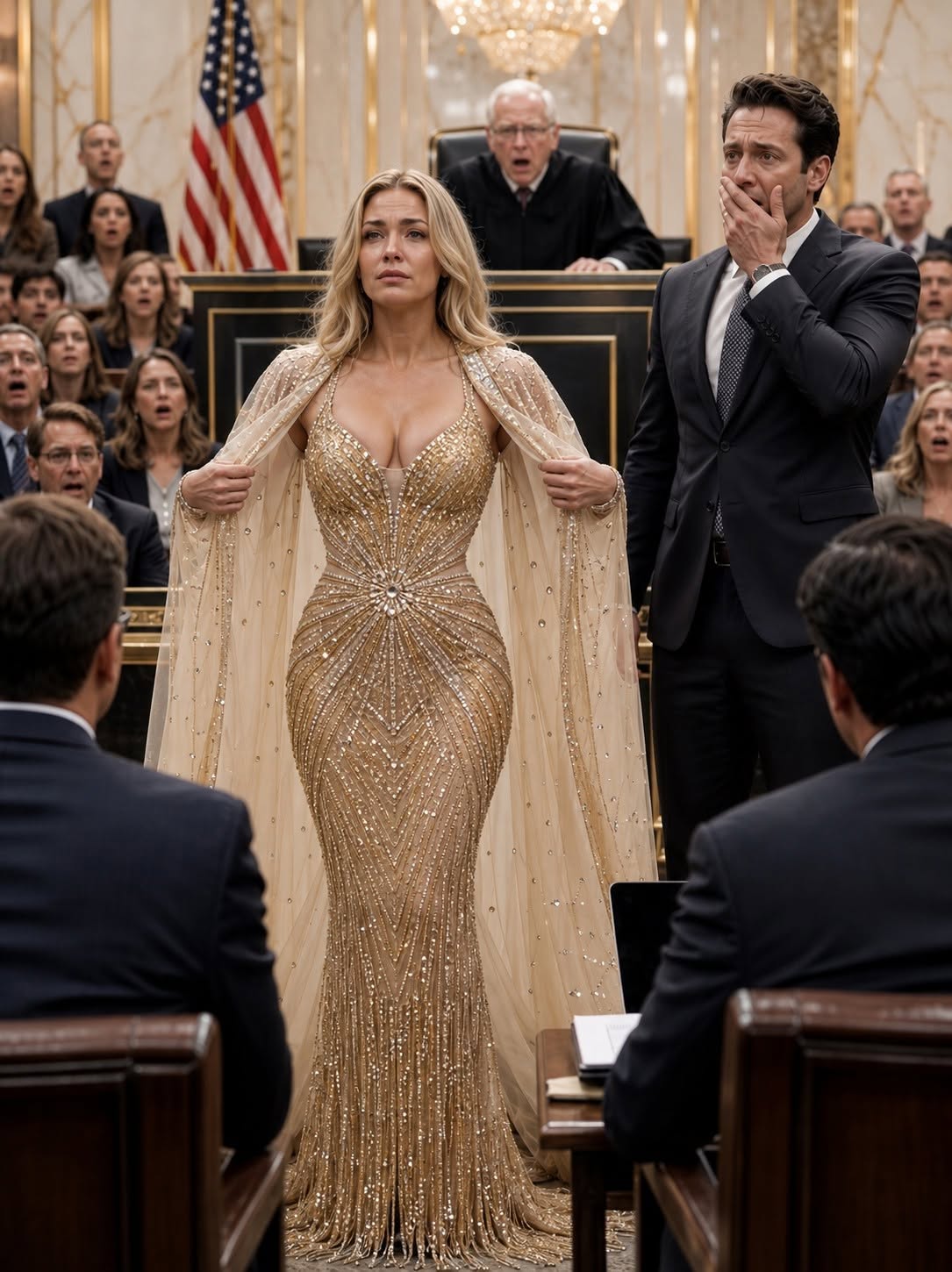
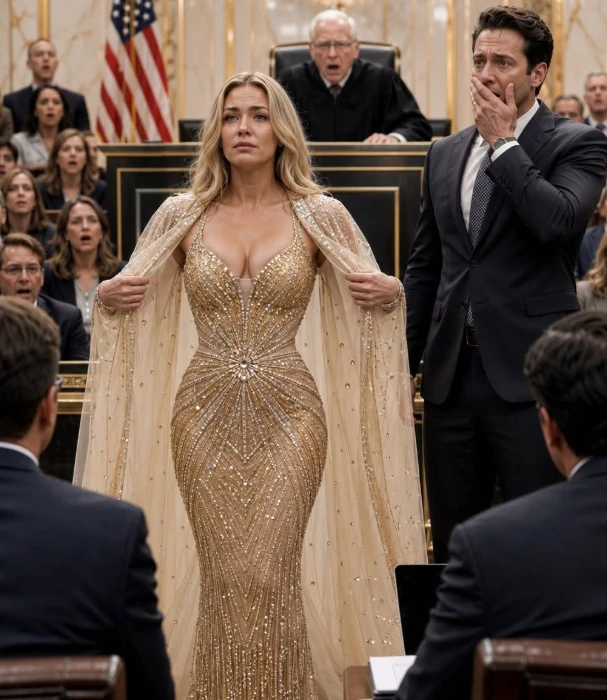
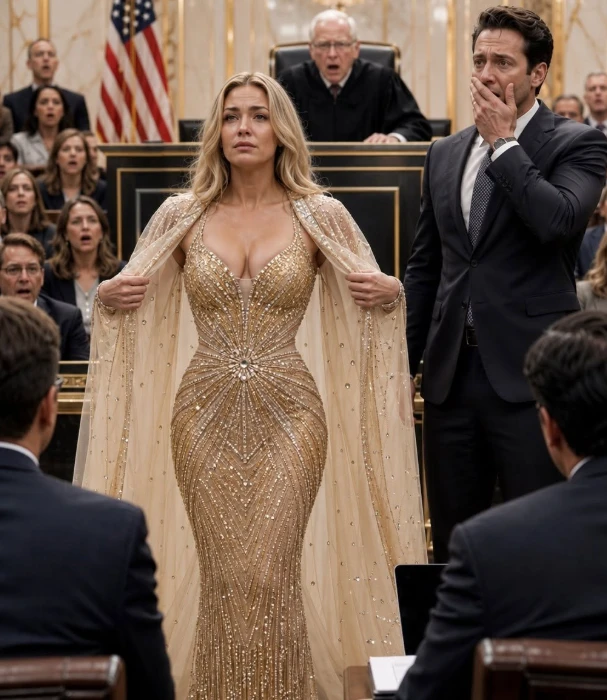
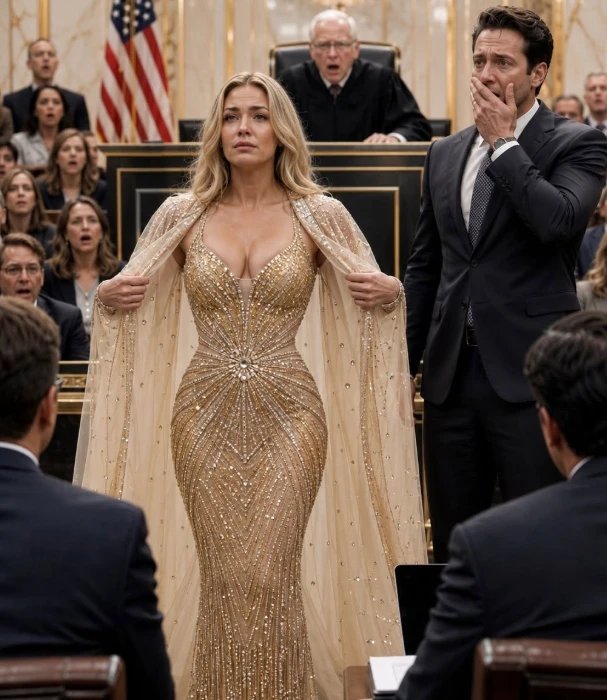
When the judge called my name, I stood, adjusted the long coat draped over my shoulders, and faced the courtroom. Evan watched with a confident smile, certain that everything was unfolding exactly as he had planned.
Then I opened the coat.
The room went silent.
“Your Honor,” I said calmly, “before anyone decides who is telling the truth, I’d like the evidence to speak first.”
What Evan failed to remember was that before I became his wife, I spent more than a decade studying evidence for a living.
My name is Dr. Amelia Carter.
For years, I worked as a forensic physician, examining injuries, documenting trauma, and helping courts understand what the human body reveals when words are unreliable. I testified in criminal cases, assisted investigators, and taught that physical evidence rarely lies.
People do.
Evidence doesn’t.
Unfortunately for Evan, he had forgotten that lesson.
To the outside world, he was everything a woman could want. Successful. Charming. Generous. He shook hands at charity events, sponsored local programs, and smiled for every photograph.
People admired him.
Some even envied our marriage.
They never saw the version of him that existed behind locked doors.
The man who turned small disagreements into hours of intimidation. The man who used silence as punishment and anger as a weapon. The man who slowly convinced me that I was worth less than the life I had built before meeting him.
His mother, Vivian, was no different.
She treated humiliation like a hobby.
At social gatherings, she would make cutting remarks disguised as jokes, then smile while everyone laughed.
One afternoon she looked directly at me and said, “It’s remarkable how quickly some women disappear after marriage.”
The guests chuckled.
I smiled politely.
Neither of them realized I was paying attention to everything.
Every insult.
Every threat.
Every injury.
Every lie.
The beginning of the end came after Evan returned home from a business event with lipstick on his collar. When I questioned him, he didn’t bother explaining.
Instead, he grabbed my arm hard enough to leave marks and leaned close.
“No one will ever believe you,” he whispered.
The next morning, he filed for divorce.
Within weeks, the accusations began.
According to Evan, I was unstable.
According to Vivian, I fabricated problems for attention.
According to several carefully selected witnesses, I was manipulative and emotionally dangerous.
They built an entire case around the assumption that I would remain silent.
What they didn’t know was that I had spent months gathering records, photographs, medical reports, and timelines.
I had documented everything.
So as I stood in court, I explained each injury with the same precision I had used throughout my career. I described healing patterns, documented dates, and pointed out contradictions that made Evan’s story impossible.
One by one, his explanations collapsed.
The confidence disappeared from his face.
The judge began asking different questions.
His attorneys stopped interrupting.
For the first time in years, Evan looked afraid.
Because the truth has a way of surviving, even when people work very hard to bury it.
And on that day, the man who thought he controlled every part of my life discovered something far more powerful than intimidation.
He discovered evidence.
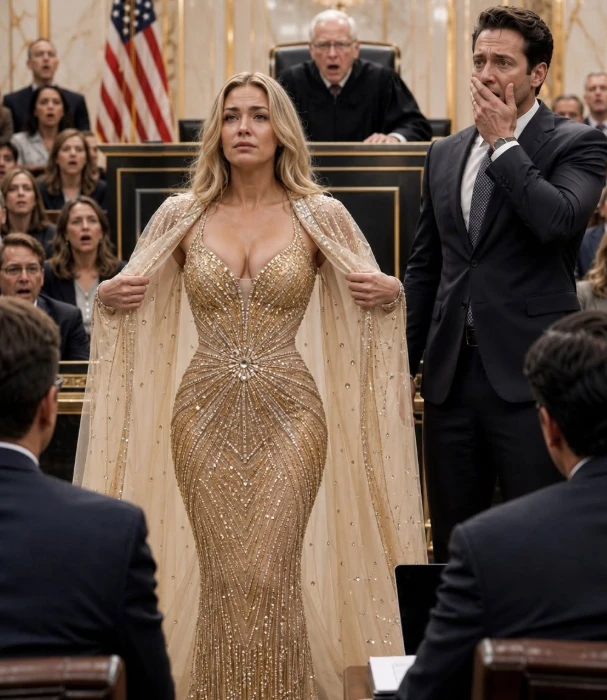
The courtroom had been built for order.
Wooden benches.
Polished floors.
Flags standing motionless behind the judge.
A place where emotion was expected to sit quietly while facts took the stand.
But when I opened my coat, even the air seemed to stop moving.
Underneath, I wore a sleeveless ivory dress.
Simple.
Professional.
Chosen carefully.
Not because I wanted sympathy.
Because I wanted visibility.
Across my upper arms, faint yellowing bruises remained from the night Evan had grabbed me in our kitchen. Along my left collarbone was a fading purple mark from where he had shoved me into the hallway wall. Near my wrist, beneath the skin, was a healing pattern shaped almost perfectly like fingers.
Not dramatic enough for television.
Not fresh enough to shock anyone who did not know what they were looking at.
But I knew.
The judge knew.
And from the way Evan’s attorney suddenly looked down at his papers, he knew too.
Evan’s smile vanished.
For the first time since we entered that courtroom, he looked at me not as a wife he had conquered, but as a witness he had underestimated.
“Dr. Carter,” the judge said carefully, “are you presenting these injuries as evidence relevant to this proceeding?”
“Yes, Your Honor.”
My voice did not tremble.
I had spent years training myself to speak clearly in rooms where terrible truths were being discussed. I had described broken bones, defensive wounds, and trauma patterns while grieving families sat nearby. I had learned that calm was not the absence of feeling.
Calm was discipline.
“These injuries were photographed, medically examined, and documented on multiple dates,” I said. “The reports have already been submitted to the court.”
Evan’s attorney stood immediately.
“Your Honor, we object to this display. This is theatrical and prejudicial.”
I turned my head slowly toward him.
Theatrical.
It was remarkable how quickly violence became offensive once it was visible.
May you like


The judge’s expression hardened.
“Counsel, your client has alleged that Dr. Carter is unstable, dishonest, and fabricating claims for leverage in this divorce. If documented injuries contradict those allegations, the court will hear them.”
The attorney sat down.
Beside Evan, Vivian shifted stiffly in her seat.
She was dressed in pale blue silk with a pearl necklace at her throat, looking every inch the grieving mother of a misunderstood son. She had been practicing that expression for weeks. I knew because I had seen her use it before.
At charity luncheons.
At family dinners.
At hospital fundraisers.
Always the same performance.
Soft eyes.
Pressed lips.
One hand placed over her heart.
As if cruelty became elegance when wrapped in pearls.
The judge looked back at me.
“Proceed.”
I picked up the first folder from the table in front of me.
My attorney, Marisol Vega, gave me the smallest nod.
Marisol had warned me that this moment would be difficult.
Not because the evidence was weak.
Because truth, once spoken aloud, changes the room permanently.
“This photograph was taken on March 14th,” I began. “The bruise visible on my right upper arm measures approximately six centimeters by four centimeters. The pattern is consistent with forceful gripping by an adult hand.”
The courtroom remained silent.
I placed the photograph on the visual display.
The image appeared on the screen beside the judge.
Evan looked away.
That small movement told me everything.
He could deny words.
He could twist memories.
But he could not comfortably look at what his hands had done.
“At the time,” I continued, “Evan claimed I had fallen against the kitchen island.”
His attorney rose again.
“My client did not—”
Marisol stood before he could finish.
“The statement is included in Mr. Carter’s written response, page eight, paragraph three.”
The judge looked down.
A few seconds passed.
“Overruled.”
I continued.
“The location of the injury makes that explanation unlikely. The kitchen island in our home has a rounded marble edge at hip height. This bruise was on the upper inner arm. The injury pattern does not match impact against furniture. It matches compression.”
The judge took notes.
Evan’s jaw tightened.
Behind him, Vivian whispered something under her breath.
I heard only one word.
Shameful.
For years, she had used that word like a leash.
It was shameful to contradict Evan.
Shameful to mention private matters.
Shameful to embarrass the family.
Shameful to have bruises.
Never shameful to cause them.
I turned to the next page.
“April 2nd. Emergency clinic visit. I reported wrist pain after being pulled backward during an argument. The treating physician noted swelling and tenderness around the distal radius. No fracture, but soft tissue injury consistent with forceful traction.”
Evan’s attorney leaned toward him.
Evan did not look at the lawyer.
He was staring at the folder in my hands, as if trying to guess how many more pages existed.
He should have known better.
I was a forensic physician.
I did not bring one folder when ten were necessary.
I did not rely on memory when records existed.
I did not accuse when I could prove.
The next exhibit was a timeline.
Dates.
Locations.
Photos.
Medical notes.
Text messages.
Audio transcripts.
Witness statements from people Evan had forgotten were not loyal to him.
A neighbor who heard shouting.
A housekeeper who saw the broken vase.
A nurse colleague who noticed bruising beneath my sleeve during a hospital board meeting.
A security guard from our building who had preserved hallway footage showing me leaving the apartment at 1:13 a.m., barefoot, holding my coat closed with one hand.
Evan had told everyone I was dramatic.
The footage showed something else.
It showed a woman trying not to fall apart until she reached the elevator.
As the video played, I did not watch the screen.
I watched Evan.
His face had turned gray.
Not pale.
Gray.
The color of a man realizing that the walls around his story were not walls at all.
They were paper.
The judge leaned forward.
“Mr. Carter, you stated in your filing that Dr. Carter left the home that night voluntarily after what you described as a minor disagreement.”
Evan swallowed.
“Yes, Your Honor.”
The judge glanced at the screen, where the frozen image showed me stepping into the elevator with visible redness near my cheek.
“Would you like to clarify that statement?”
His attorney touched his arm.
“Your Honor, my client—”
The judge cut him off.
“I asked Mr. Carter.”
Evan’s mouth opened.
Nothing came out.
It was not the first time silence had filled a room between us.
But it was the first time his silence did not protect him.
Finally, he said, “I don’t remember exactly.”
My laugh was quiet.
Too quiet for the whole courtroom to hear, perhaps.
But Evan heard it.
He had always remembered everything when memory served him.
He remembered my mistakes from years earlier.
He remembered old arguments.
He remembered every moment he could use to make me feel small.
But now, surrounded by evidence, his memory had become selective.
The judge’s expression darkened.
“You don’t remember an incident significant enough for your wife to leave the residence after midnight?”
“It was a stressful period,” Evan said.
“Stress,” I said softly, “does not leave fingerprints.”
The room went still again.
Marisol placed another document in front of me.
This one was different.
This one was not about bruises.
It was about his reputation.
The reputation he had spent years polishing until people mistook shine for substance.
“Your Honor,” Marisol said, “we would now like to address the pattern of coercive control relevant to the financial and custodial claims Mr. Carter has made.”
Evan turned sharply.
“This has nothing to do with money.”
Marisol looked at him.
“It has everything to do with money.”
Then she opened the second folder.
Bank statements.
Restricted account access.
Emails from Evan instructing financial advisors not to provide me with information without his approval.
Messages where he threatened to cut off household funds if I contradicted him publicly.
Documentation of charitable donations made in both our names using funds from accounts I had been blocked from reviewing.
He had wanted me dependent.
Quiet.
Embarrassed.
He had not understood that restriction creates a trail.
Every locked account.
Every changed password.
Every threatening message.
Every transfer.
Every attempt to isolate me financially.
All of it was evidence.
“All of this,” Marisol said, “shows that Mr. Carter’s claim of Dr. Carter being financially irresponsible is not only unsupported but contradicted by his own actions. He controlled access. He controlled records. He controlled the narrative.”
The judge looked at Evan.
“And yet your filing claims Dr. Carter mismanaged marital assets.”
Evan’s attorney exhaled slowly.
That was when I knew.
He had not seen everything.
Evan had not given his own attorney the full truth.
Men like Evan often assume lawyers are weapons.
They forget weapons can backfire when loaded with lies.
The judge called for a brief recess.
The moment she left the bench, the courtroom erupted into whispers.
Evan stood immediately and strode toward me.
Marisol stepped between us.
“Do not approach my client.”
He stopped inches from her.
His eyes moved past her to me.
“What are you doing?”
I met his stare.
“Exactly what you taught me.”
His face twisted.
“I never taught you this.”
“Yes, you did,” I said. “You taught me that words could be twisted. So I stopped relying on words.”
His voice dropped.
“You’re humiliating me.”
For a moment, I almost smiled.
There it was.
Not remorse.
Not horror at what he had done.
Humiliation.
That was what hurt him.
Not my injuries.
Not my fear.
Not the years I spent shrinking inside our marriage.
Only the fact that other people could see him clearly now.
“You humiliated yourself,” I said.
Vivian appeared behind him.
“Amelia,” she said, her voice sharp beneath its polished surface, “this is enough.”
I turned to her.
For years, I had feared that voice.
The quiet authority.
The practiced disappointment.
The way she could make a room decide who deserved compassion.
But standing there in court, with evidence spread across the table, Vivian looked smaller than I remembered.
“Enough was the first time your son put his hands on me,” I said.
Her eyes narrowed.
“You are destroying this family.”
“No,” I said. “I am refusing to disappear inside it.”
Something in her face flickered.
Rage.
Fear.
Recognition.
Perhaps all three.
She leaned closer.
“You think people will admire you for this?”
“I don’t need admiration.”
“Then what do you want?”
The answer came easily.
“Freedom.”
Vivian looked at me as if I had spoken a foreign language.
Women like Vivian understood control.
Status.
Appearances.
They did not understand freedom because they had spent their lives trading it for influence.
The bailiff announced that court was resuming.
Everyone returned to their seats.
Evan did not smile again.
When the judge reentered, the room changed.
Before the recess, Evan had been a respected man defending himself against accusations.
After the recess, he was a defendant in a story he could no longer edit.
Marisol called the next witness.
Dr. Samuel Greene.
My former department chief.
A careful, soft-spoken man with silver hair and the calm demeanor of someone who had spent decades seeing through panic to find facts.
He testified that I had been respected in my field.
Stable.
Methodical.
Careful with documentation.
He explained that forensic physicians are trained to distinguish accidental injuries from inflicted ones.
He confirmed that I had consulted him months earlier, not to build a dramatic case, but to ensure that my own observations about my injuries were medically objective.
Evan’s attorney tried to imply that my expertise allowed me to fabricate evidence more convincingly.
Dr. Greene looked almost offended.
“Expertise does not create bruising patterns,” he said. “It helps interpret them.”
The judge wrote that down.
I saw her do it.
By late afternoon, Evan’s case had begun to unravel completely.
One witness admitted that Vivian had asked her to describe me as “emotionally volatile,” even though she had never personally witnessed me behave that way.
Another conceded that Evan had provided talking points before the hearing.
A third contradicted Evan’s timeline so severely that even his attorney stopped asking questions.
Lies can look elegant in preparation.
They rarely survive contact with dates.
At 4:16 p.m., Marisol presented the final exhibit.
An audio recording.
Evan went rigid.
I had not told him about that one.
The recording began quietly.
A kitchen.
The hum of the refrigerator.
My voice asking, “Why did you tell everyone I was unstable?”
Then Evan’s voice.
Clear.
Cold.
Because no one will believe you over me.
The courtroom seemed to inhale.
On the recording, my voice remained low.
“You hurt me.”
Then his.
You should have learned when to stop pushing.
My hands tightened in my lap.
Hearing it again was harder than I expected.
Not because I had forgotten.
Because my body remembered before my mind did.
The cold kitchen tile beneath my feet.
The smell of rain through the open window.
The way his shadow had fallen across the wall.
The terrible calm in his voice.
Then came the sentence that ended him.
If you try to make me look bad, Amelia, I will make sure everyone thinks you lost your mind.
The recording stopped.
No one moved.
Even Vivian had gone pale.
The judge looked at Evan for a long time.
“Mr. Carter,” she said, “your filing repeatedly characterizes Dr. Carter’s claims as delusional. Did you make the statement we just heard?”
His attorney stood slowly.
“Your Honor, I advise my client not to answer pending potential criminal exposure.”
Potential criminal exposure.
There it was.
The phrase Evan had never imagined entering his life.
Not in relation to him.
Not in a room where people knew his name.
Not after years of believing reputation could bleach anything clean.
The judge nodded once.
“Understood.”
Evan stared at the table.
I looked at him and felt something unexpected.
Not victory.
Not satisfaction.
Not even anger.
I felt distance.
A clean, widening distance.
As if the room had become a shoreline and he was already drifting away from me, pulled out by a tide of his own making.
The judge adjourned for the day after issuing temporary orders.
Evan was to vacate the marital residence.
He was prohibited from contacting me directly.
Financial restraints were placed on several accounts.
The court would refer portions of the evidence to appropriate authorities for review.
Vivian gasped at that part.
Evan did not move.
For once, he had no speech prepared.
No charm.
No performance.
Just consequences.
Outside the courthouse, reporters waited.
I had not expected them.
Someone had tipped them off.
Maybe one of Evan’s people.
Maybe someone from Vivian’s circle trying to control damage.
Cameras turned as soon as I stepped onto the courthouse steps.
“Dr. Carter, do you have a statement?”
“Is it true you presented medical evidence against your husband?”
“Are you seeking criminal charges?”
Marisol looked at me.
“You don’t have to say anything.”
I knew that.
Silence had been my survival for years.
But silence had also been Evan’s favorite weapon.
So I stopped walking.
The reporters quieted.
I faced them beneath the gray afternoon sky.
“My only statement is this,” I said. “For years, I was told that no one would believe me. Today was not about revenge. It was about truth. And truth does not need permission from powerful men.”
Then I walked away.
By evening, Evan’s world began collapsing in public.
The first charity removed his name from its advisory board.
Then a hospital foundation announced that it was reviewing his donations.
Then a business magazine quietly deleted a glowing profile of him from its homepage.
People who had once admired him began using careful language.
Concerned.
Troubled.
Disturbed.
Those words were not justice.
But they were a beginning.
That night, I returned to the house alone.
The house felt different.
Not peaceful yet.
But empty in a way that made peace possible.
I walked from room to room, turning on lights.
The living room where Vivian had mocked my career.
The dining room where Evan had corrected my opinions in front of guests.
The hallway where I had learned to listen for his footsteps before deciding whether to speak.
For years, the house had felt like a museum of his moods.
Now it was just a house.
Walls.
Floors.
Windows.
Things could be changed.
I stood in front of the bedroom mirror and removed the ivory dress.
Slowly.
Carefully.
My reflection looked tired.
There were bruises on my skin and shadows beneath my eyes.
But I did not look broken.
That surprised me.
For so long, Evan had told me what I was.
Fragile.
Difficult.
Ungrateful.
Unstable.
Looking at myself now, I saw none of those things.
I saw a woman who had survived.
A woman who had documented.
A woman who had waited until the truth was strong enough to stand without shaking.
My phone buzzed once.
A message from an unknown number.
For a moment, I thought it was Evan.
It was not.
It was Dr. Greene.
You did something brave today. I know what it cost.
I sat on the edge of the bed and cried for the first time.
Not loudly.
Not dramatically.
Just quietly, with one hand pressed against my mouth, as if some part of me still believed I needed permission to make noise.
The next morning, I woke before sunrise.
For the first time in years, no one was angry that I had slept too long.
No one criticized the coffee.
No one asked why I looked tired.
I made tea, wrapped myself in a robe, and stepped onto the balcony.
The city was still half asleep.
Cars moved below like small pieces on a board.
The sky slowly softened from black to blue.
My attorney called at eight.
“Are you ready for today?” she asked.
I looked at the horizon.
“Yes.”
“There may be more pressure. Evan’s team wants a settlement discussion.”
“Of course they do.”
“They’re offering generous terms if you agree to seal portions of the record.”
I smiled faintly.
There it was again.
Control.
Different room.
Different language.
Same instinct.
“What portions?”
“The audio. Some medical exhibits. Anything that could damage his professional standing further.”
“His professional standing survived what he did to me,” I said. “It can survive people knowing.”
Marisol was silent for a moment.
Then she said, “I thought you might say that.”
“I don’t want cruelty,” I said. “But I won’t trade truth for comfort.”
“That is your right.”
After we ended the call, I opened the closet.
Evan’s suits still hung in perfect rows.
Navy.
Charcoal.
Black.
The armor of a respectable man.
I touched one sleeve, then let it fall.
By noon, a moving company had boxed his belongings under supervision.
By evening, the closet was half empty.
It looked strange.
Beautifully strange.
Space where there had once been weight.
Two weeks later, the temporary orders became permanent enough for me to breathe.
Evan’s attorneys stopped attacking my character and started negotiating numbers.
Vivian stopped calling after Marisol sent a formal notice.
The court proceedings continued, but the direction had changed.
No one asked whether I was believable anymore.
They asked what else I had.
And I had enough.
Three months later, the divorce was finalized.
I stood outside the courthouse with a folder in one hand and my future in the other.
Evan exited through a side door.
He looked thinner.
Less polished.
His reputation was no longer spotless.
Neither was mine, according to some people.
There were those who said I should have stayed quiet.
Those who said private matters should remain private.
Those who said exposing him was harsh.
But I had learned something important.
People who benefit from silence often call truth cruelty.
Evan paused when he saw me.
For a moment, he looked like the man I had once loved.
Not because he had changed.
Because memory is dangerous.
It can soften sharp edges if you let it.
“Amelia,” he said.
I waited.
He looked down at the courthouse steps.
“I never thought you would do it.”
“I know.”
That was the problem.
He had believed my silence was loyalty.
Then he believed it was fear.
He never understood it was preparation.
“I lost almost everything,” he said.
I looked at him carefully.
“No. You kept more than many people get to keep.”
He frowned.
“You think I deserved worse.”
“I think you deserved the truth.”
His mouth tightened.
Then, quietly, he said, “Did you ever love me?”
The question hurt more than it should have.
Because yes.
I had.
I had loved him before control became cruelty.
Before apologies became strategies.
Before I learned that charm in public does not excuse fear in private.
“Yes,” I said. “That’s why it took me so long to leave.”
He absorbed that like a sentence.
Maybe it was.
I turned to go.
“Amelia,” he said again.
I stopped, but did not look back.
“Are you happy now?”
I looked at the open sky above the courthouse.
Happy was too small a word.
Too simple.
I was grieving.
I was relieved.
I was exhausted.
I was rebuilding.
I was free.
“I’m honest now,” I said.
And that was enough.
Six months later, I returned to work.
Not immediately.
Healing is not a straight line, no matter how carefully people want to draw it.
Some mornings, I woke strong.
Other mornings, a slammed door in a neighboring apartment made my whole body remember fear.
Some days, I missed the man Evan had pretended to be.
Other days, I hated myself for missing anything at all.
But slowly, life widened.
I began consulting again.
Teaching again.
Testifying again.
The first time I stood in front of a class of medical residents after everything, I looked at their young, attentive faces and wondered how much truth they were ready to carry.
I placed a case file on the podium.
“Evidence matters,” I told them. “But never forget the person behind it.”
No one spoke.
I continued.
“Bruises fade. Records get challenged. Victims are questioned. Memory becomes complicated under fear. Your job is not to decide whether someone looks broken enough to be believed. Your job is to document carefully, listen respectfully, and understand that the body may be the only witness brave enough to speak.”
After class, a young woman approached me.
She held her notebook tightly against her chest.
“Dr. Carter,” she said, “thank you.”
There was something in her eyes I recognized.
Not because she said anything.
Because she didn’t have to.
I nodded.
“You’re welcome.”
That evening, I walked home through a soft rain.
The city lights reflected on the pavement.
For years, I had associated rain with the night I fled the house, barefoot and terrified.
But that evening, rain felt different.
Not like fear.
Like cleansing.
When I reached my apartment, I hung my coat by the door.
The same long coat I had worn to court.
For months afterward, I could not bring myself to put it away.
It had become more than clothing.
It was the thing I opened when I stopped hiding.
But that night, I folded it carefully and placed it in a storage box.
Not because I wanted to forget.
Because I no longer needed armor every day.
Before bed, I opened the window and let in the sound of rain.
Then I sat at my desk and began writing a lecture I had been avoiding.
The title came first.
When Evidence Speaks: Recognizing What Silence Cannot Say.
I stared at the words for a long time.
Then I began.
I wrote about patterns.
About documentation.
About power.
About the dangerous myth that credible people cannot be cruel.
I wrote about the way reputations can become shields.
I wrote about how many survivors are asked why they did not speak sooner, when the better question is why so many people refused to notice.
I did not write Evan’s name.
He did not deserve to be the center of my story anymore.
By midnight, I had twelve pages.
By sunrise, I had something that felt less like a lecture and more like a beginning.
A year after the divorce, I stood on a stage at a national forensic medicine conference.
Hundreds of physicians, attorneys, advocates, and investigators filled the room.
My hands were steady.
My voice was clear.
Near the end, I paused and looked out at the audience.
“For a long time,” I said, “someone told me no one would ever believe me.”
The room became very quiet.
“He was wrong. But more importantly, I learned that belief should never depend on charm, status, or who tells the story first. It should depend on truth. On documentation. On courage. On our willingness to look closely even when powerful people ask us to look away.”
When I finished, the room rose in applause.
I stood beneath the bright lights, not as Evan Carter’s ex-wife, not as Vivian’s failed daughter-in-law, not as the woman they had tried to erase.
I stood as Dr. Amelia Carter.
A physician.
A witness.
A survivor.
A woman who had opened her coat in a courtroom and let the evidence speak.
Later that evening, alone in my hotel room, I stepped out onto the balcony.
The night air was cool against my skin.
Below, the city moved on without knowing my history.
That comforted me.
For so long, I thought survival would feel like victory.
Sharp.
Triumphant.
Loud.
But it didn’t.
It felt quiet.
Like locking a door behind you and realizing no one on the other side had a key.
Like hearing your own name and recognizing yourself again.
Like understanding that the truth had not only exposed him.
It had returned me to myself.
Evan had spent years telling me that no one would ever believe me.
He said it until it sounded like a fact.
But facts require proof.
And in the end, proof was exactly what destroyed him.
Not anger.
Not revenge.
Not drama.
Evidence.
The one language he could not charm, threaten, or silence.
And when the evidence finally spoke, everyone listened.